GLOBAL SHAPERS CHENGDU HUBPRESENTS

Stay in
the Loop.

Build practical AI capability for a changing world of work.

We combine capability assessments, community learning and applied challenges to help young people and early-career workers navigate AI-shaped work.

Real people. Shared learning. Practical change.
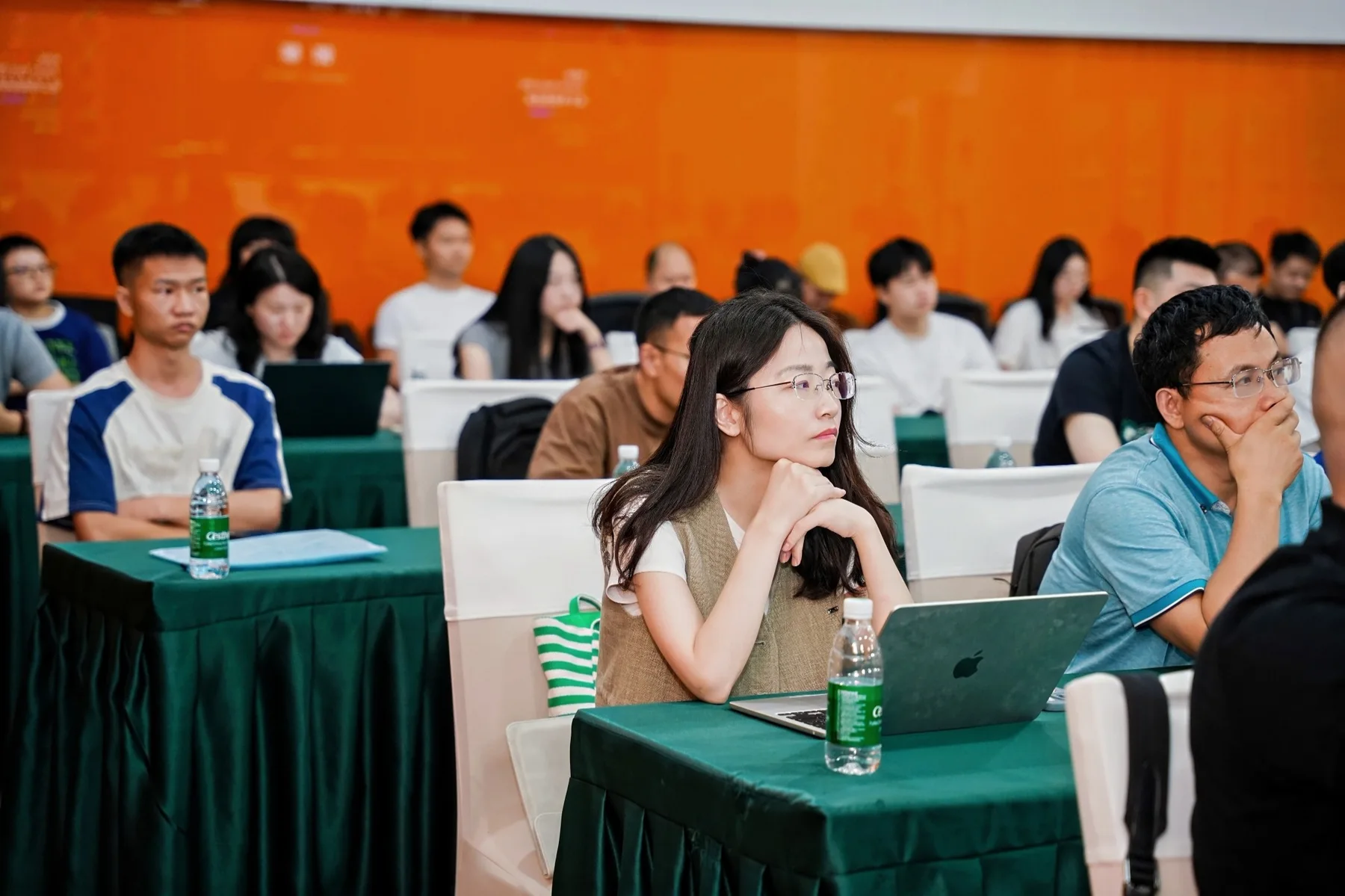
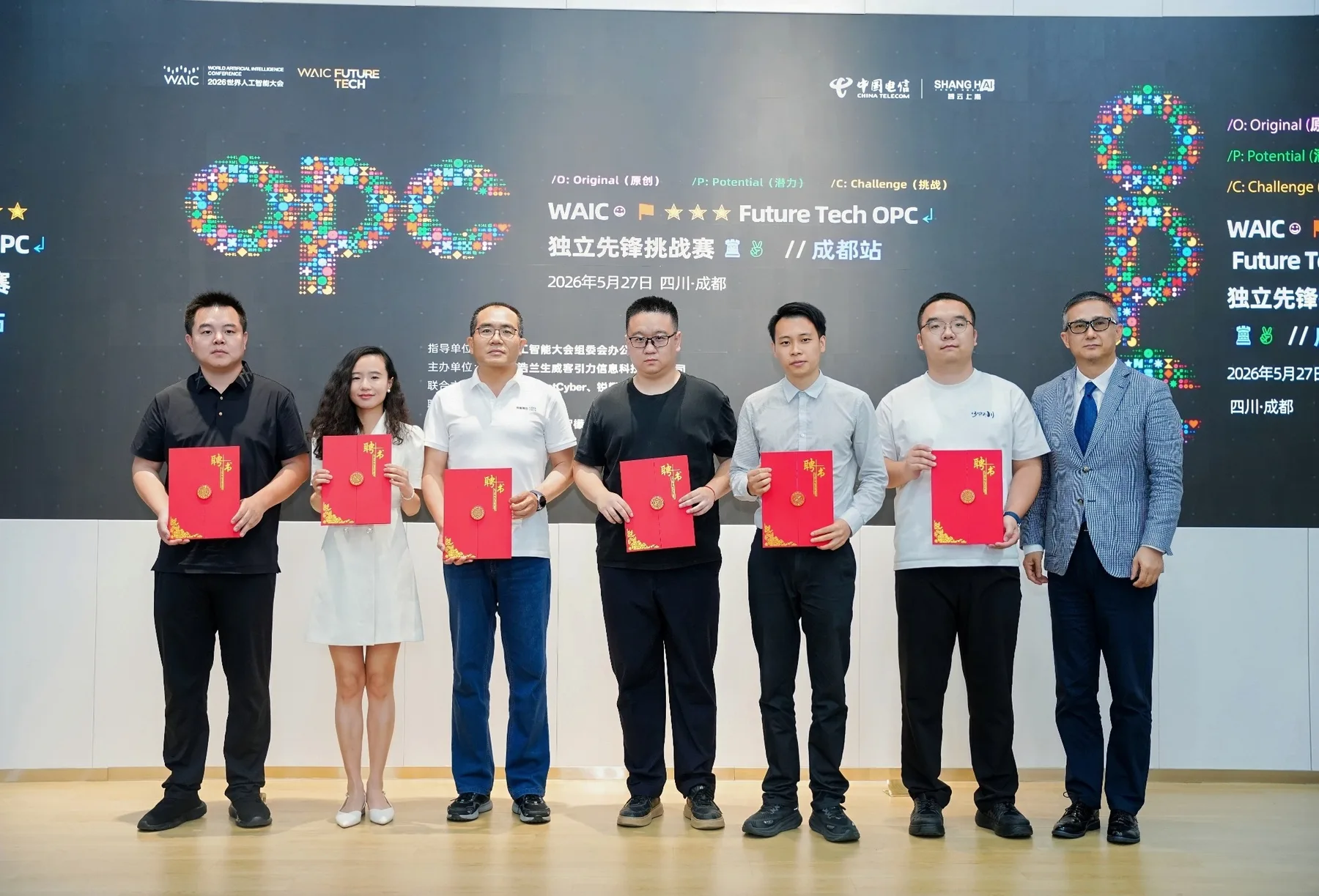
Young participants at the WAIC Future Tech OPC Challenge in Chengdu
The WAIC Future Tech OPC Challenge community gathered in Chengdu
CHENGDU / IN COMMUNITY
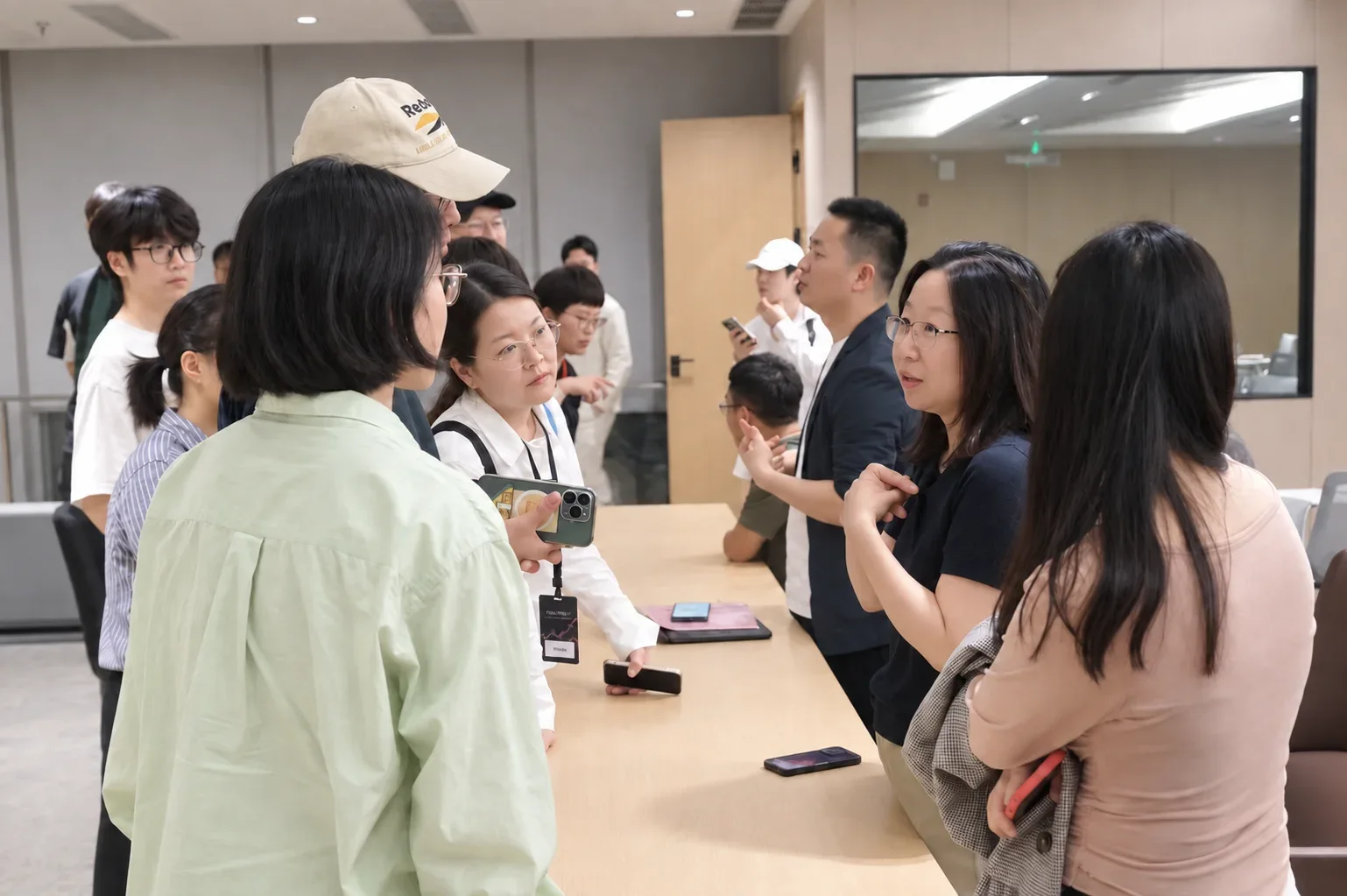
Participants exchanging ideas around a table after FDE Open Night
SHANGHAI / IN CONVERSATION
Young participants in Chengdu. Conversations in Shanghai. Capability grows in community.

Our Reach

120K+Cumulative reach

Broader reach through assessments, learning, events and project activities.

Explore further
5K+Direct participations

Direct participation across programme activities.

Explore further
8Countries in the project footprint

Countries within the initiative’s wider reach.

Explore further

Reach and participation figures describe programme activity, not verified capability or employment outcomes.

How we measure

03 / THE MODEL

A pathway from change to opportunity.

The loop keeps capability building connected to the world people are trying to navigate.
Stay in the Loop: three human-centred nodes connected by continuous blue orbits. Learn · Reskill · Apply · Repeat.

01 / UNDERSTAND

See how work is changing.

Understand how AI changes tasks, roles, careers and the capabilities people need.

02 / DIAGNOSE

Know where you stand.

Identify strengths, gaps and priorities across eight capabilities and six developmental profiles.

03 / RESKILL

Build what matters.

Build practical AI fluency, collaboration and judgment through online and offline learning.

04 / APPLY

Turn capability into evidence.

Use challenges, projects and real problems to practise AI-supported work.

05 / LEARN / REPEAT

Reflect, improve and repeat.

Reflect on real-world application, improve and bring learning into the next cycle.

Learn from real work. Bring it back into the Loop.

Why the Loop: rationale, vision and theory of change

See how work is changing.

Translate changes in AI, jobs and the labour market into practical guidance about tasks, roles, careers and capability requirements.

Know where you stand.

Identify strengths, gaps and development priorities across eight capabilities and six developmental AI Work Profiles.

Build what matters.

Develop practical AI fluency, human-AI collaboration, judgment and role-based capabilities through online and offline learning.

Turn capability into evidence.

Use challenges, projects and real-world problems to move beyond learning and demonstrate how AI can be applied to practical work.

Reflect, improve and repeat.

Carry learning from real-world application back into the next cycle of understanding, diagnosis and capability building.

The AI transition should expand opportunity — not widen the gap.

AI is changing tasks, roles and career pathways faster than traditional learning and workforce systems can adapt.

But the ability to respond is uneven. Some people have access to new tools, guidance, professional networks and learning opportunities. Many others do not.

Stay in the Loop exists to make the AI transition more navigable and more inclusive — so people can understand what is changing, build the capabilities that matter, and turn those capabilities into real opportunity.

Our vision

Our vision is a future where AI expands human opportunity rather than deepening the divide between those who can adapt early and those who cannot.

A light theory of change
  1. Better information
  2. Clearer capability gaps
  3. Targeted learning
  4. Real-world application
  5. Stronger career and workforce outcomes

The goal is not more AI training. It is better adaptation to an AI-shaped world of work.

04 / THE LOOP IN ACTION

The Loop in Action

Three examples of how communities learn, build and explore AI in practice.

Photo preview · Select a photograph to enlarge
Chengdu, China · APPLY

Chengdu, China

Chengdu — Applied AI Challenge

WAIC Future Tech OPC Challenge · ~80 participants. Supported by Global Shapers Chengdu Hub.

Explore the Chengdu Field StoryParticipant activities · Field photography · Original challenge poster5 archive imagesOriginal challenge poster

Field Story

Learning matters when it can be used.

An applied AI challenge environment where participants move from ideas to problem framing, solution development and presentation.

WAIC Future Tech OPC Challenge · ~80 participants. Supported by Global Shapers Chengdu Hub.

Application makes capability visible, testable and useful beyond the learning room.

Bring a challenge into the loop

Field Photography

Young participants at the WAIC Future Tech OPC Challenge in Chengdu

Original Evidence

Public poster for the WAIC Future Tech OPC Challenge · View original

The WAIC Future Tech OPC Challenge connected ideas with practical work through problem framing, solution development and presentation. Participants explored how AI could support real problems in an applied challenge setting. The activity illustrates the Apply stage of the Loop: making capability visible through practice, with learning carried into the next cycle.

Photo preview · Select a photograph to enlarge
India · RESKILL

India

India — Foundational AI Learning

Foundational AI literacy · India classroom and remote learning

Explore the India Field StoryClassroom activities · Community learning · Remote-session documentation7 archive imagesRemote-learning documentation

Field Story

Foundational AI learning in India.

Foundational AI literacy and future-readiness learning for children and communities with limited access to emerging technology and digital learning opportunities.

Foundational AI literacy · India classroom and remote learning

Access to AI capability building should not depend on geography or privilege.

Earlier learning programmes

Foundational AI literacy · Learning delivery in China, India and Kenya

Earlier learning programmes across China, India and Kenya engaged 200+ educators and education leaders and reached 1,000+ learners. These are programme-specific figures, not additional initiative totals or India-only counts. They describe reach and participation, not unique people or learning outcomes.

Field Photography

Young learners gathered for an AI literacy classroom activity in India
An educator connecting a classroom in India with a remote learning session

Original Evidence

An online foundational AI literacy session in progress · View original
An educator supporting remote foundational learning in an India classroom · View original

Foundational AI literacy and future-readiness learning brought children and communities into a shared learning setting. Classroom and remote sessions focused on widening access to emerging technology and digital learning opportunities. The case illustrates how capability-building activities can meet communities where they are, while preserving the distinct record of earlier multi-country programmes.

Photo preview · Select a photograph to enlarge
Shanghai · Jing’an · 23 September 2026

Shanghai · Jing’an

Shanghai Jing'an — FDE Open Night

Co-organized by Global Shapers Chengdu Hub

Explore the FDE Open Night StoryEvent photography · Participant exchanges · Delivery conversations5 archive imagesEvent context

Field Story

FDE OPEN NIGHT / SHANGHAI

120 in the room. 2,000+ online.

One question: how does AI actually get delivered?

FDE OPEN NIGHT

From AI demos to real-world delivery

前线工程与交付落地交流会

From enterprise agents and AI security to productization and frontline engineering, FDE Open Night brought developers, enterprise practitioners and AI builders together to explore what it takes to move AI from proof-of-concept into real delivery.

Co-organized by Global Shapers Chengdu Hub

FDE capability developmentEnterprise Agent deploymentAI safety and securityProductization after proof-of-conceptFrom Demo to real delivery
200+Registrations
~120Onsite participants
2,000+Livestream audience
5Speakers

Registrations, onsite participation and livestream audience are separate measures; they are not added into a unique-person count.

What “Apply” looks like in the real world.

Field Photography

Participants exchanging ideas around a table after FDE Open Night
Participants holding event recognition letters in front of the FDE Open Night screen

FDE Open Night brought developers, enterprise practitioners and AI builders together to explore what it takes to move AI from proof-of-concept into real delivery. Conversations covered enterprise agents, AI safety, productization and frontline engineering. Onsite participation and the livestream audience represent different forms of engagement and are reported separately.

~120 Onsite participants2,000+ Livestream audience

More Field Stories

Photo preview · Select a photograph to enlarge
Shanghai · Xuhui, China · RESKILL

Shanghai · Xuhui, China

Forward Deployed Engineering & AI-Native Work

Nearly 100 practitioners and professionals. Supported through a collaboration involving OpenCSG, the Communist Youth League Xuhui District Committee and Global Shapers Chengdu Hub.

Explore the Earlier Shanghai Field StoryLearning activities · Practitioner photography · Original source recap4 archive imagesSource recap

Field Story

Forward Deployed Engineering & AI-Native Work

Role-based learning focused on connecting AI systems with real organizational problems, workflows and business needs.

Nearly 100 practitioners and professionals. Supported through a collaboration involving OpenCSG, the Communist Youth League Xuhui District Committee and Global Shapers Chengdu Hub.

Emerging AI roles require both technical fluency and business-context judgment.

Field Photography

A speaker leading the earlier Shanghai FDE learning session

Original Evidence

Read the source recap

Role-based learning focused on connecting AI systems with real organizational problems, workflows and business needs.

05 / TOOLS THAT POWER THE LOOP

Find your starting point.

Start with a quick reflection, or explore your capabilities through a deeper assessment.

LEVEL 1 · EXPLORE

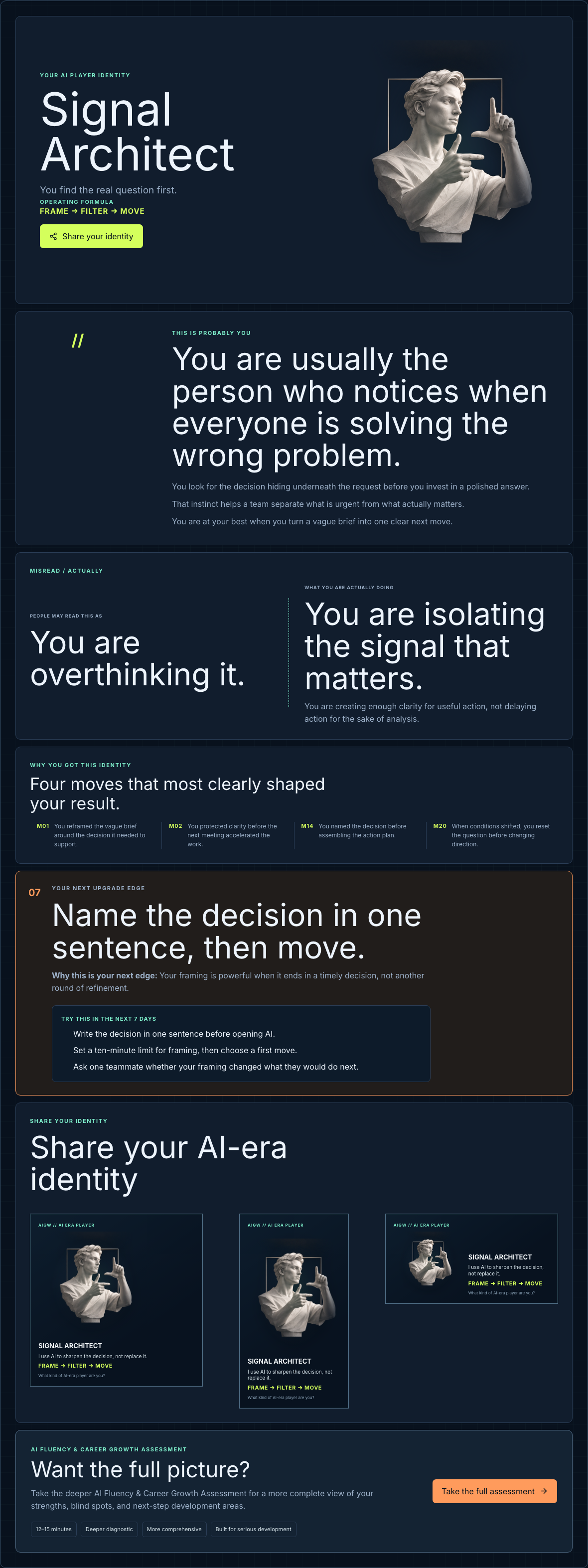
AI Era Player

6–7 minutes · 7 primary Player Types + the additional Mission Integrator identity · Exploratory · Shareable result
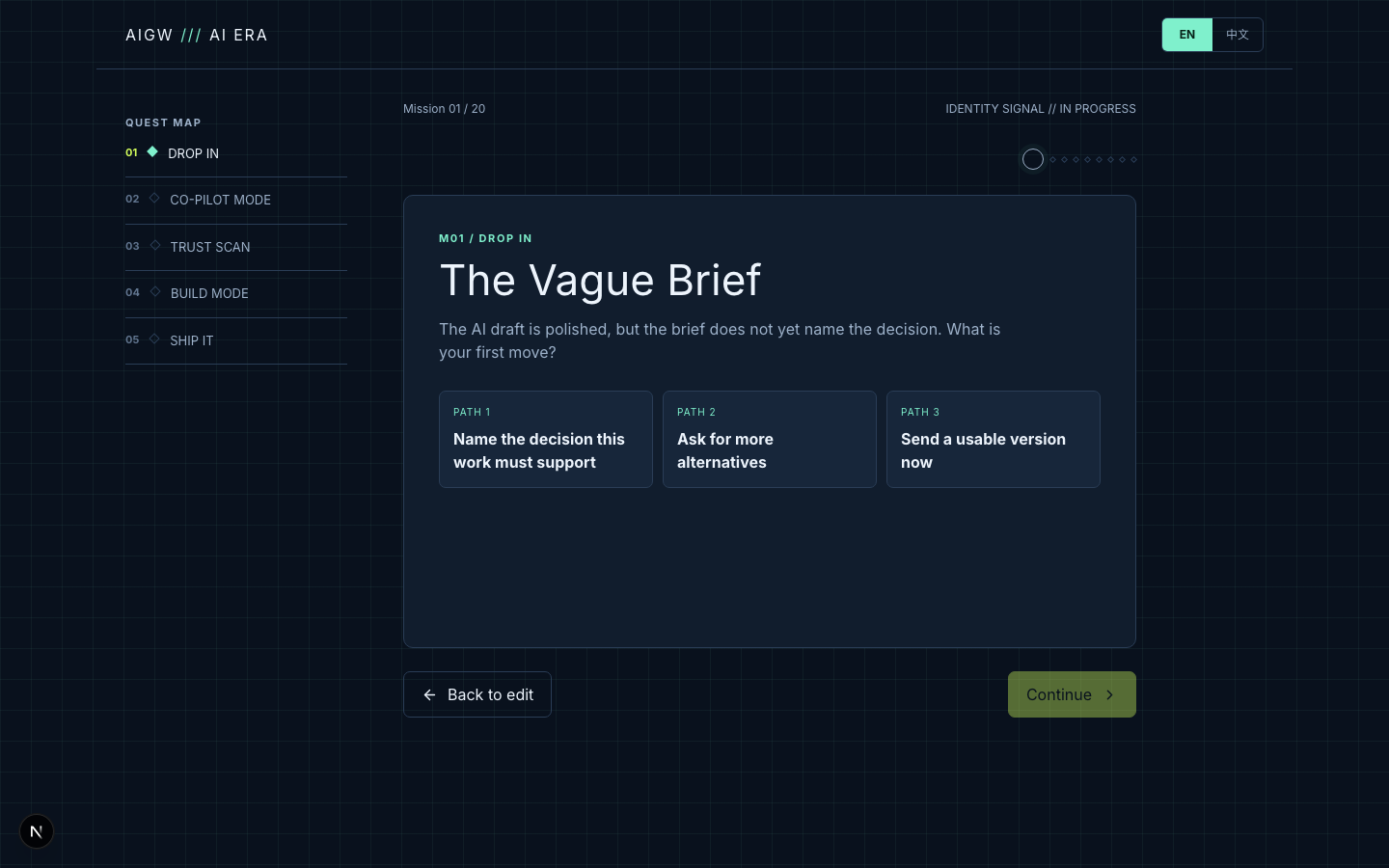
AI Era Player discovery quest sample

Explore how you currently work with AI.

Start with AI Era Player

AI fluency isn’t one skill.

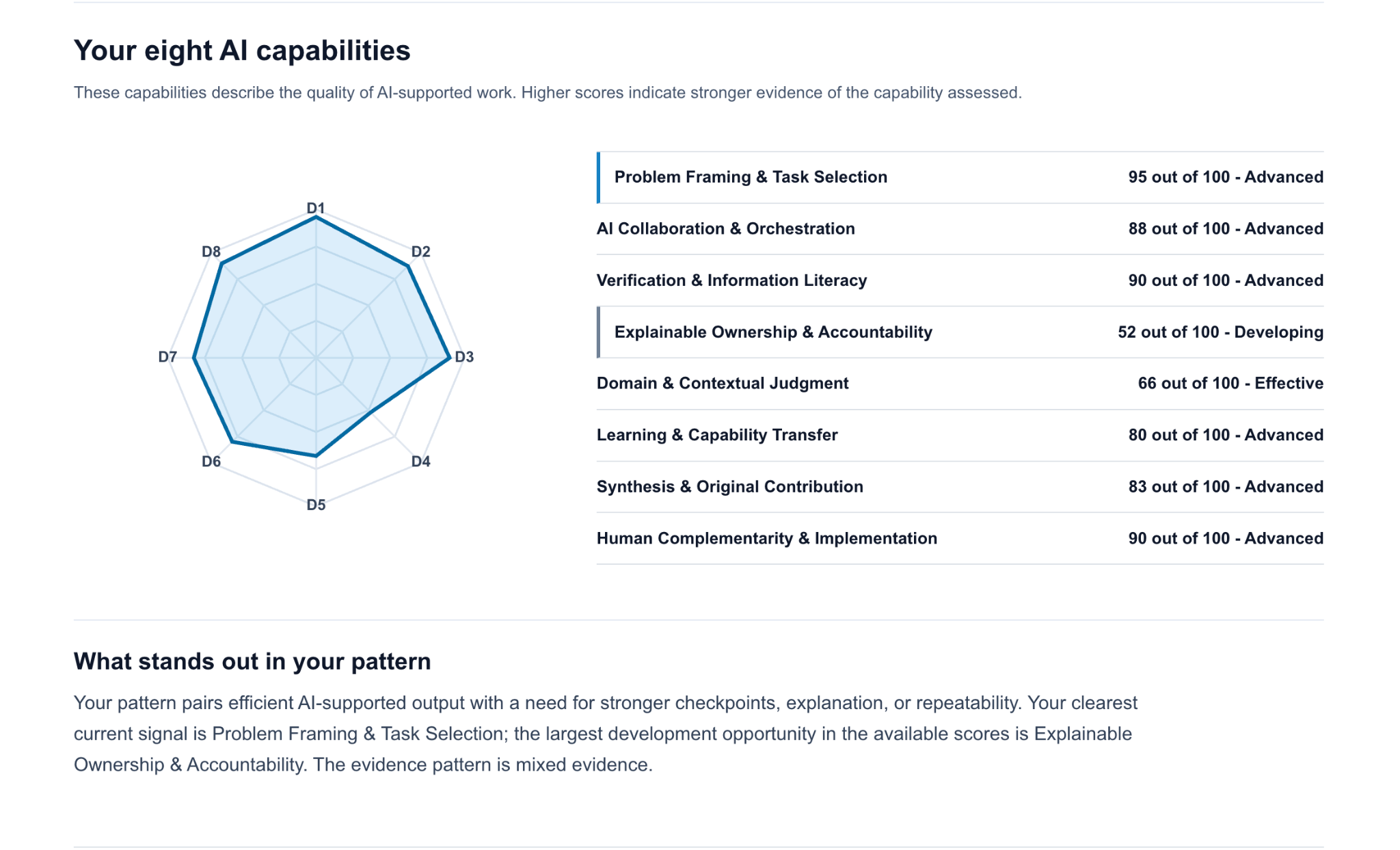
The quality of AI-supported work depends on more than knowing how to prompt. Our assessment looks at eight capabilities that shape how people frame problems, collaborate with AI, verify information, exercise judgment, take ownership, learn and create original value.

Read the AI Fluency framework
Eight AI fluency capability dimensions
  1. Problem Framing & Task Selection
  2. AI Collaboration & Orchestration
  3. Verification & Information Literacy
  4. Explainable Ownership & Accountability
  5. Domain & Contextual Judgment
  6. Learning & Capability Transfer
  7. Synthesis & Original Contribution
  8. Human Complementarity & Implementation
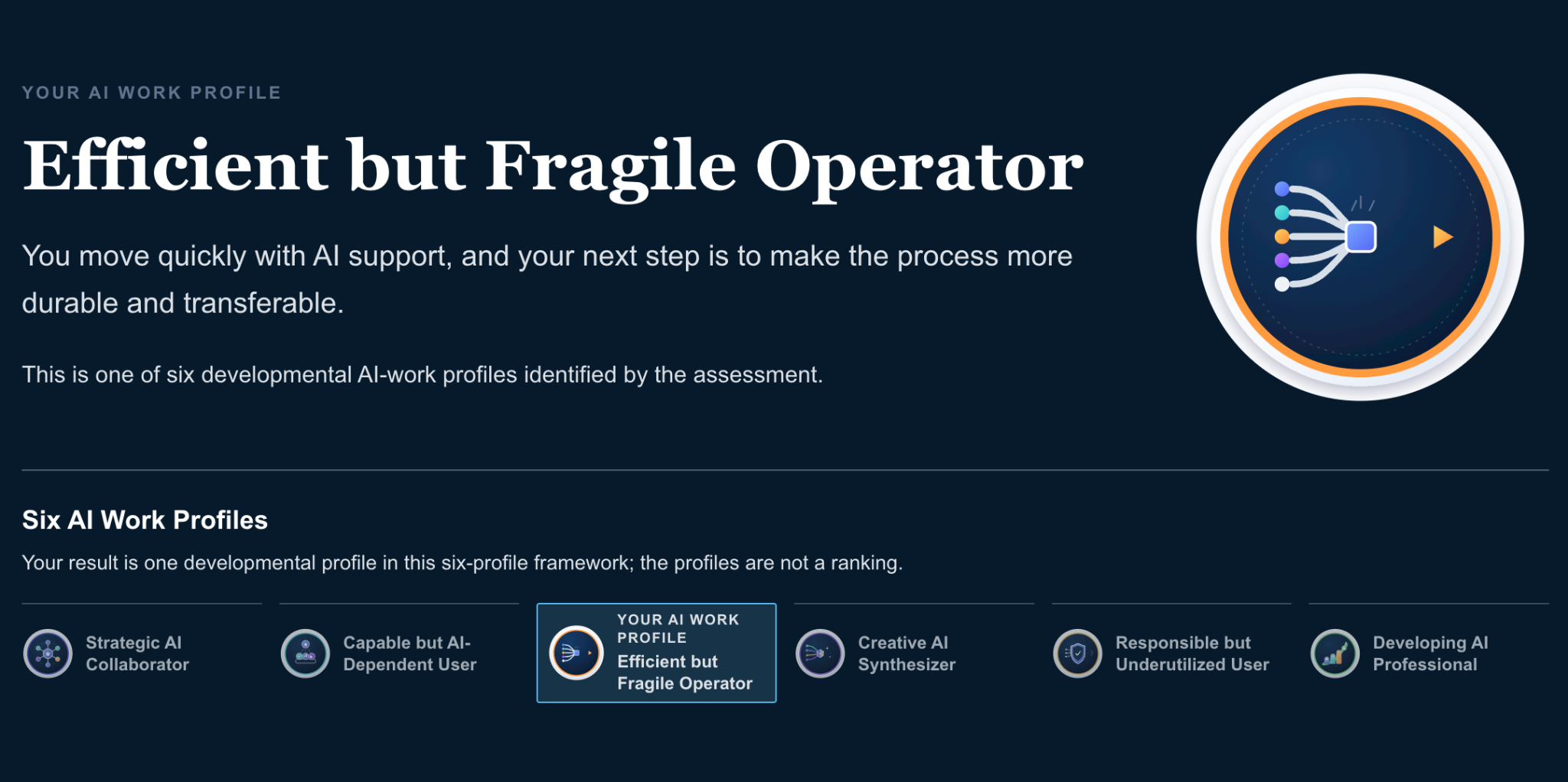
Six developmental AI Work Profiles

The assessment does not reduce people to a single score. It identifies developmental patterns that help people understand how they currently work with AI — and what to build next.

  • Strategic AI Collaborator
  • Capable but AI-Dependent User
  • Efficient but Fragile Operator
  • Creative AI Synthesizer
  • Responsible but Underutilized User
  • Developing AI Professional
Explore the product experience

06 / THE NETWORK

Connected communities. Local approaches.

9Hubs in the network8Countries in our footprint

Explore the hub network, documented field activities and wider project reach. Involvement and delivery differ across locations.

Nine Global Shapers communities. Shared learning, with each hub contributing in its own way.

Hub network

Hub network

Chengdu

China

Part of the Global Shapers community network supporting Stay in the Loop. Each hub takes part in its own way.

Map: Natural Earth · Public domain.

Local adaptation

One model. Many local ways to use it.

The long-term goal is not to export one fixed curriculum. It is to build a model that local communities can adapt to their own workforce and learning context.

LanguageExamplesDeliveryLearning contextLocal workforce needs

07 / EVIDENCE & LEARNING

Evidence & Learning

Research and field conversations help us decide what to assess, teach and test next.
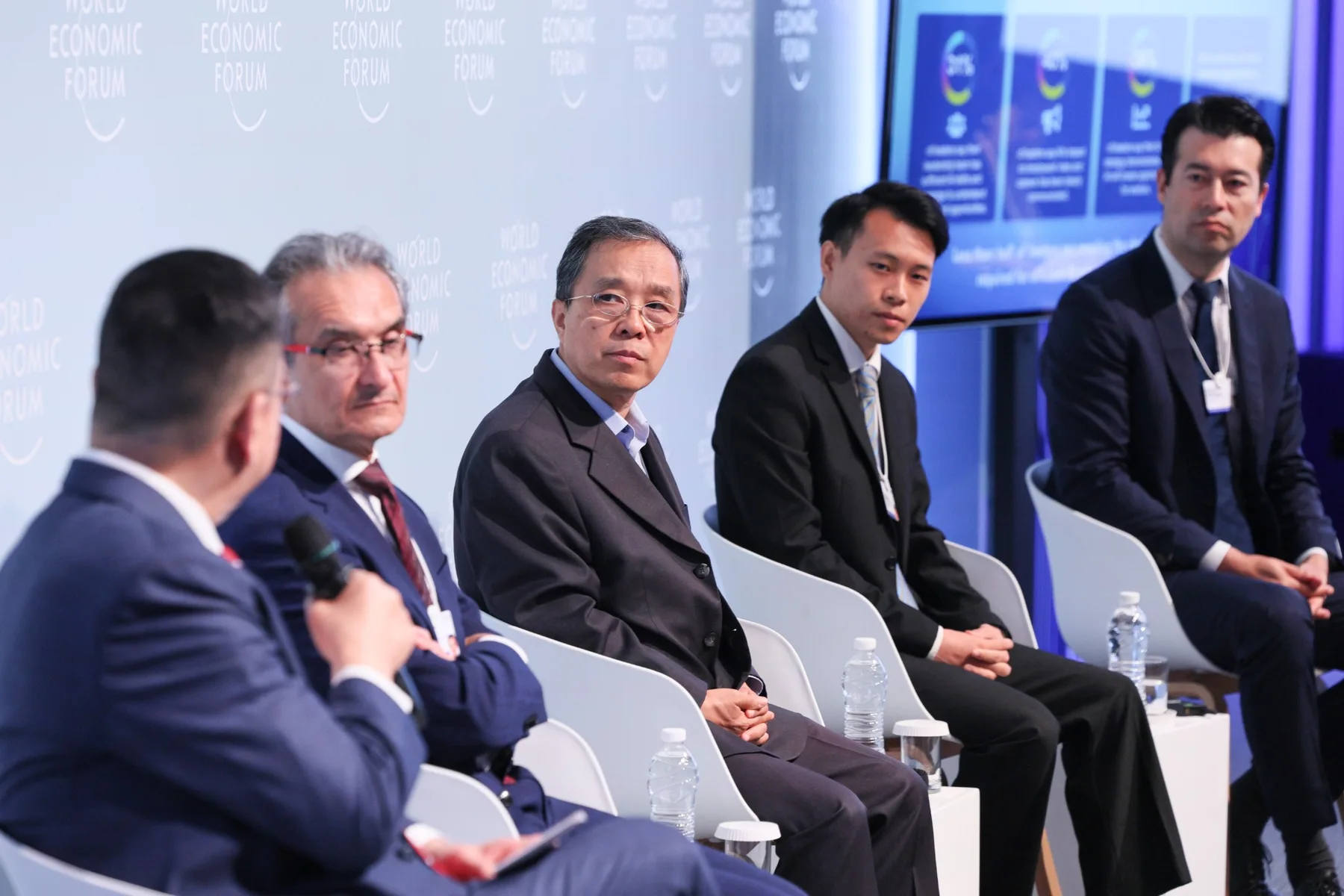
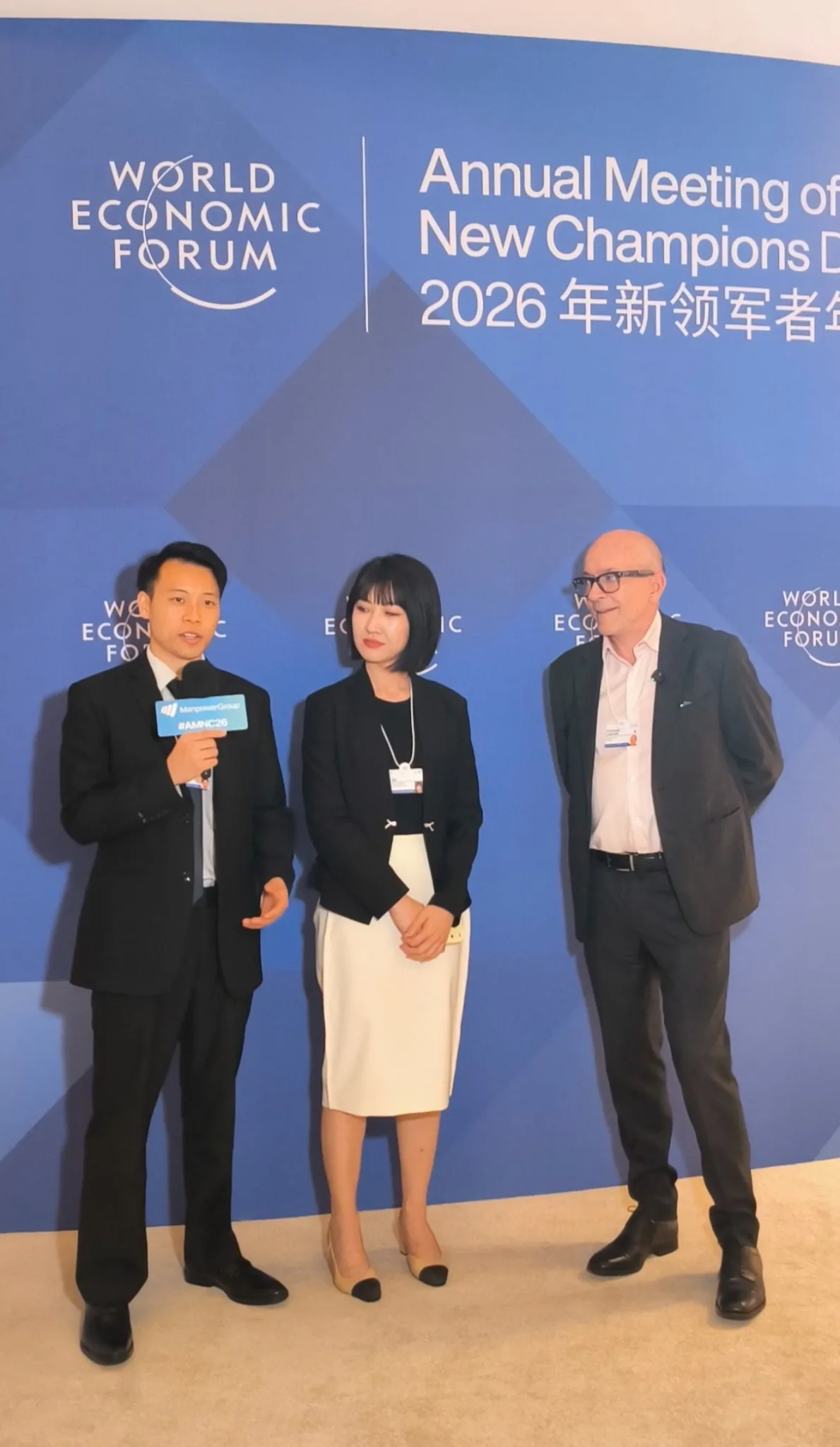
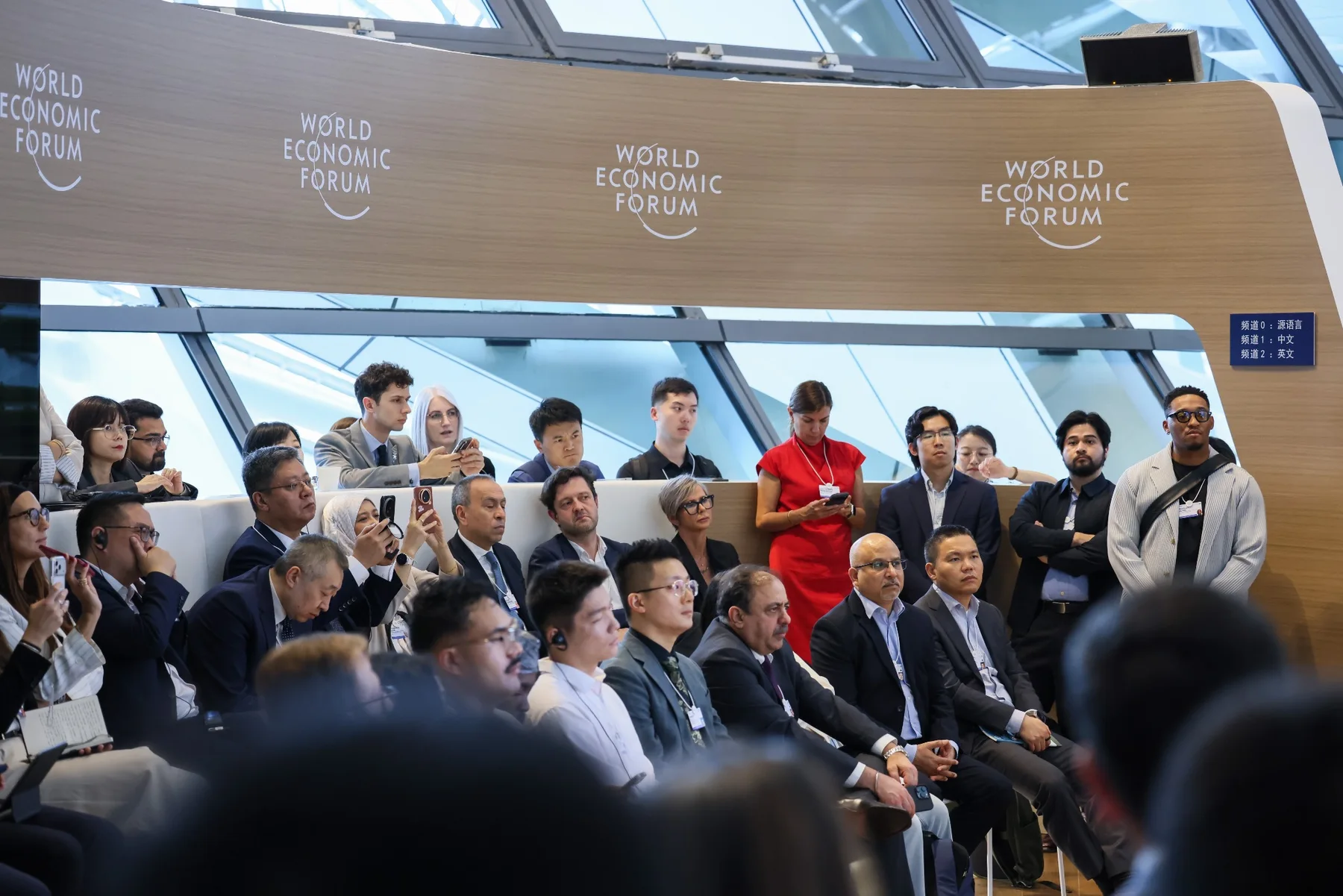
Panel discussion on the future of work
More evidence
More conversations (3)

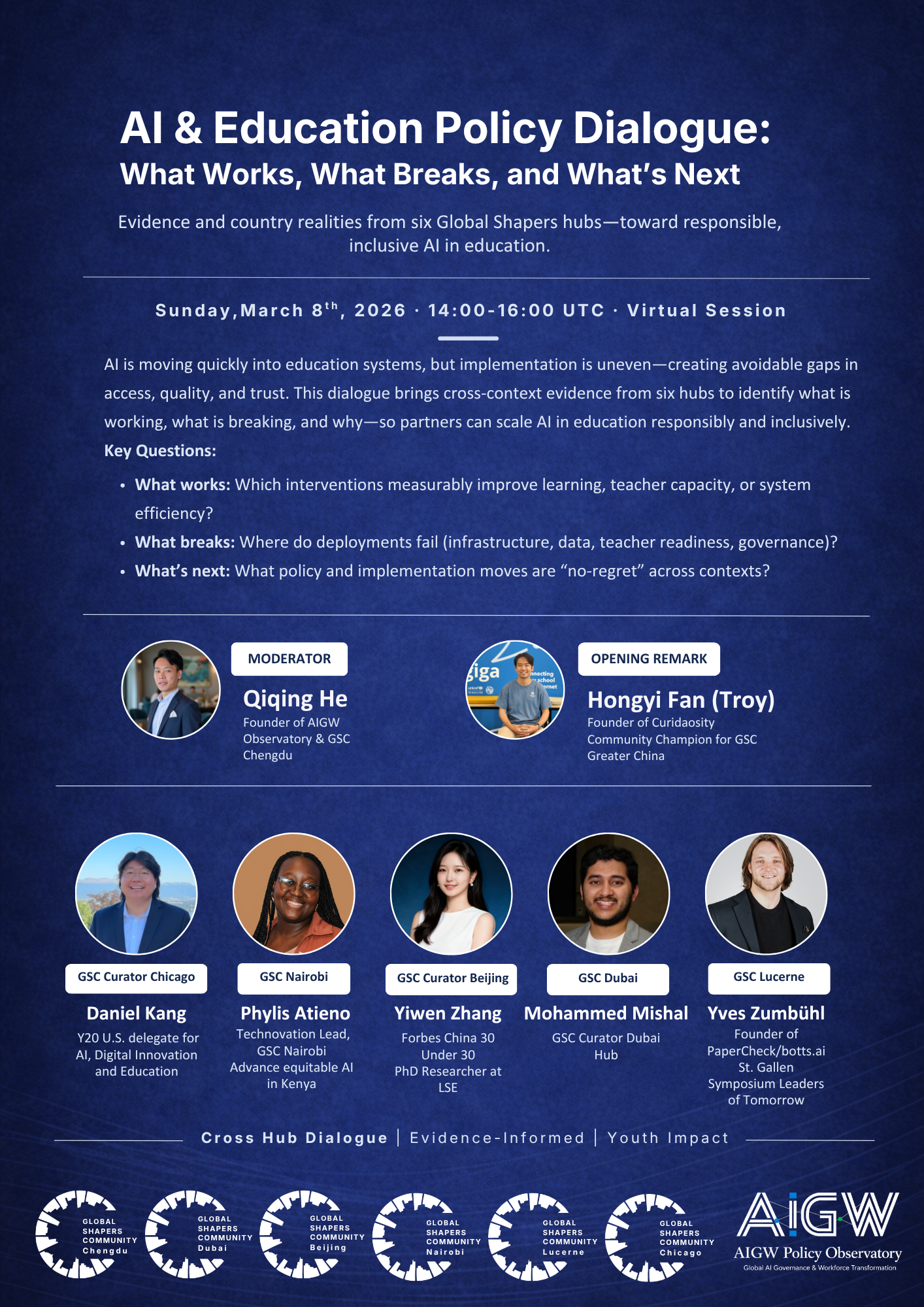
Public dialogue keeps local evidence in conversation across communities and contexts.

Updated AIGW Policy Observatory poster for the AI & Education Policy Dialogue, 8 March 2026

Continue the conversation.

Explore the updated AIGW Policy Observatory event poster and watch the full conversations.

Watch the featured conversation
Field conversations and documentation

07 / LISTEN → MEASURE → ADAPT

We listen before we design.

We continuously gather perspectives from young professionals, business leaders, educators and workforce practitioners to understand how AI is changing real work before deciding what people should be assessed or trained on.

40+ FIELD CONVERSATIONS

From field evidence to global dialogue.

Insights from our work on AI, Gen Z and workforce transformation have informed conversations with business leaders and international audiences on how AI is reshaping early-career work, capability development and the future of work.

Cross-hub dialogue, future-of-work conversations, research and public dialogue.

Listening across roles helps us understand what people need to learn, use and repeat.

Generation Z — The Great ExpectationDoes AI Change the Future of Work?

These conversations inform our work; they do not imply endorsement.
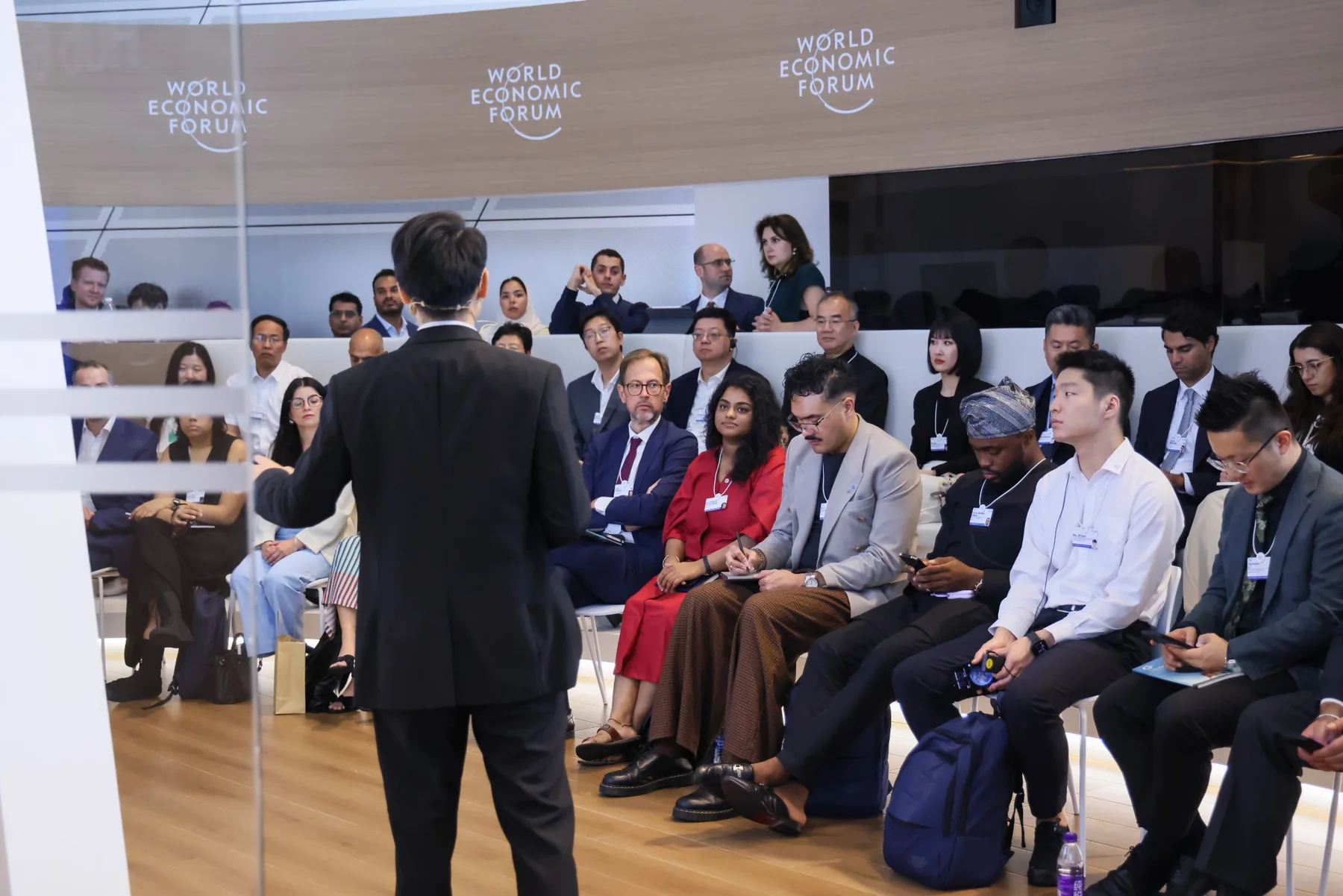
A speaker addressing an international future-of-work conversation
International future-of-work conversation
Panel discussion on the future of work
Interview during a future-of-work conversation
Audience during a future-of-work conversation

We design around evidence — not a fixed curriculum.

As work changes, the capabilities people need will change too. Research, field conversations and public dialogue continuously feed back into the program.

What we measure

We record reach and participation separately, and study changes in capability, application and outcomes. Activity figures do not establish capability gains or improved careers. The definitions and questions below explain how we distinguish these levels and what we are still learning.

Reach
Who encountered the initiative
Participation
Who directly took part
Capability
What people learned or developed
Application
What was applied in real situations
Outcome
What changed over time
Measurement definitions and testing questions

FROM REACH TO IMPACT

We do not treat participation as impact.

Reach matters. But the next question is whether capability, behaviour and opportunity actually change.

01

Reach

Who encountered the initiative

02

Participation

Who directly took part

03

Capability

What people learned or developed

04

Application

What was applied in real situations

05

Outcome

What changed over time

The Impact Ledger

What the numbers mean.

120K+Cumulative reach

Cumulative exposure across assessments, learning, interviews and events — not a count of unique people or demonstrated outcomes.

5K+Direct participations

Participation across programme activities. A person may take part more than once, so this is not a count of unique people.

200Facilitators trained

Facilitators trained to support learning and capability building. Training facilitators is distinct from measuring what participants learn.

30Sessions delivered

Sessions delivered across the initiative. A session count describes activity, not learning or career outcomes.

800+Assessment starts

Assessments started, not completed assessments or unique participants. Starting an assessment does not demonstrate capability improvement.

What we are now testing

We are studying whether learning changes capability, practice and opportunity. These are questions we are exploring, not outcomes we have already demonstrated.

Capability Development

Stronger evidence of effective AI-supported work.

Real-World Application

New skills and workflows applied in study, work or projects.

Career Clarity

Better-informed learning and career decisions.

Learning Transfer

Capability carried into classrooms, organizations and communities.

Institutional Adoption

Tools and learning models reused by hubs, schools and organizations.

08 / BUILD THE NEXT LOOP WITH US

JOIN THE LOOP.

Capability building gets stronger when more people can add a perspective, a problem, a place or a practical next step.

For educators & communities

Bring practical AI capability building to your learners.

  • Run an AI literacy activity
  • Use the assessment
  • Host a workshop
  • Build a learning cohort
Bring It to Your Community

For organizations

Connect workforce needs with diagnosis, learning and real-world application.

  • Run a capability cohort
  • Pilot the diagnostic
  • Bring a real-world challenge
  • Contribute workforce evidence
Explore a Pilot

For Global Shapers

Adapt the model in your community.

  • Run the assessment
  • Host a dialogue
  • Deliver a learning activity
  • Localize the model
  • Share field evidence
Bring It to Your Hub