

Imagine an HR team that has just introduced AI. Recruitment reports take minutes rather than hours. Employee questions receive instant answers. Managers can see that people are using the tools. By the usual measure of an IT rollout, the project looks successful.
Yet the team's jobs may be much the same. People still have the same responsibilities, managers still make decisions in the same way, and nobody has considered what staff should do with the time saved. The technology has changed; the work has barely moved.
This is the difference Singapore is beginning to address more directly. On 30 October 2026, the Singapore National Employers Federation (SNEF) introduced an AI-HR Pre-scoped Solution, bringing together advice on people strategy, AI tools, job redesign and skills analysis. The offer is being piloted. It is not a finished programme with demonstrated long-term results.
For employers elsewhere, its value lies in a question that is easy to overlook: once AI can carry out part of a job, how should the job itself change?
Employers are adopting AI, but still need guidance
SNEF's 2026 employer survey covered 1,000 employers. The federation reported that AI was already being used in at least one HR function by roughly four in five larger firms and nearly two-thirds of SMEs surveyed. Recruitment and selection were among the more common applications; employers were more cautious about sensitive matters involving employees' relationships with the company or their departure.
The survey also revealed uncertainty. In SNEF's published summary, 42% of respondents sought clearer guidance on responsibility and liability, another 42% wanted training in responsible AI use, and 36% expressed interest in AI-HR advisory support. The federation also reported that about 85% of employers using AI in HR required human confirmation or sign-off. These figures describe the surveyed employers, not every business in Singapore.
A signature does not always mean that someone has exercised good judgement. If an AI system prepares a shortlist, produces a performance assessment or recommends an HR decision, the person reviewing it needs enough knowledge, time and authority to challenge the result. Without those conditions, human oversight can become little more than a formality.
There is a longer-term concern too. When software takes over the early stages of analysis, junior employees may lose opportunities to practise the work through which they learn to exercise judgement. The question is not whether those tasks should remain manual. It is how employers will help people acquire the capabilities that once developed through doing them.
What Singapore means by job redesign
Singapore's interest in job redesign predates the latest AI boom. Workforce Singapore's Job Redesign Centre of Excellence draws a clear line between introducing technology and changing a job. If a new system leaves a person's role essentially untouched, its introduction alone does not amount to job redesign. Nor does simply adding duties make a role better or more valuable.
Consider a recruiter who uses AI to sort applications. That is AI adoption. If the employer then rethinks the role—giving the recruiter more time for candidate conversations, better checks for fairness or a greater say in workforce planning—that is job redesign. Whether the change becomes a successful workforce transformation depends on what follows: stronger skills, sounder decisions, better service, worthwhile career paths and results the business can see.
These are related steps, but they are not interchangeable. A company can adopt AI without redesigning a single role. It can also change a job description without improving the working lives of its staff.
What SNEF is offering employers
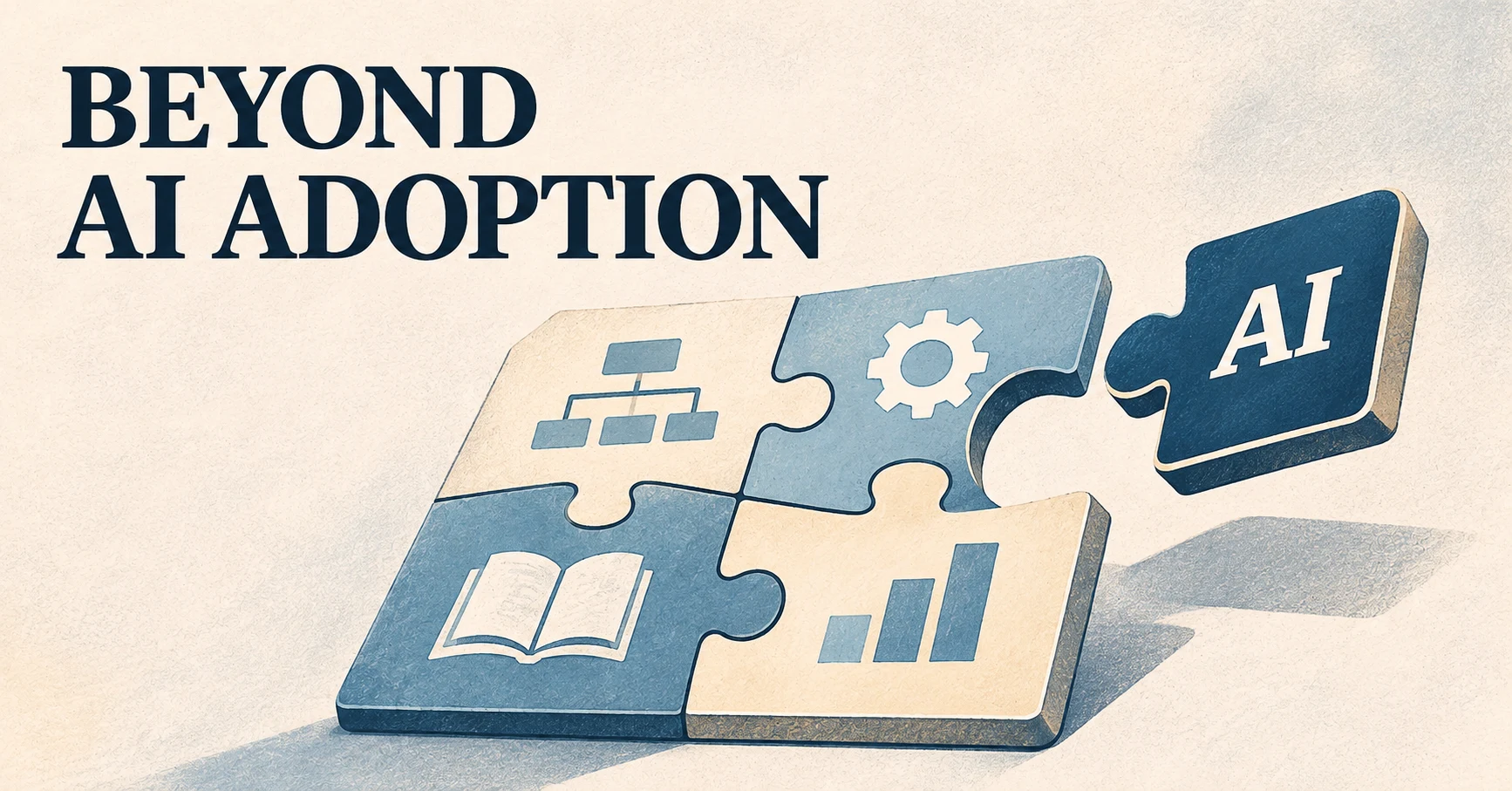
The new AI-HR solution combines four forms of support rather than treating them as unrelated purchases.
Human-capital advisory helps an employer work out what its people strategy and workforce plans require. AI agents for HR can assist with selected routine processes. Workforce transformation support looks at job redesign and the practical work of managing change. Workforce skills analytics identifies existing capabilities, gaps and areas for development.
According to SNEF, an interested employer starts by discussing its goals and needs. Advisory work can then establish what needs to change before consultants and technical specialists are brought in. The initial group of appointed consultants includes BDO, Elitez, EON, PwC and Skybots. The services can be tailored; not every company needs the same combination.
This matters particularly to smaller employers. A business may be able to buy an AI product but lack someone who can map its workflows, redesign jobs or plan training. Putting those discussions into one project could make it easier to ask whether the investment is improving work, rather than merely introducing software. Whether the bundled approach delivers better results than separate purchases remains to be shown.
Public funding gives the approach a practical route
SNEF's offer sits within Singapore's wider employment and enterprise-support system. Under the Workforce Development Grant (Job Redesign+), eligible SMEs may receive support of up to 70% of qualifying project costs, compared with up to 50% for larger firms, subject to a cap of S$150,000 per company. The scheme links relevant workforce technology to consultancy or capability-building support; it is not simply a grant to buy software.
The wider Enterprise Workforce Transformation Package, announced in March 2026, brings together measures intended to help firms change jobs and develop staff as technology advances. The programme predates SNEF's October AI-HR launch. Its overall funding should not be mistaken for the budget of this particular pilot.
There is a policy choice here. Public support is aimed not only at making technology affordable, but also at encouraging employers to think about the people and roles affected by it. That may make a difference, although the new AI-HR pilot has yet to provide published evidence of its longer-term effects.
What implementation looks like in practice
SNEF has pointed to Eligo, a small business in industrial parts and equipment, to show what employers may need. Eligo approached SNEF through the existing workforce transformation arrangements. Advisers helped assess its business and staffing needs, then matched it with a consultant. SNEF says the company began a project to streamline repetitive work and redesign roles so employees could spend more time on engineering and business development.
Eligo's experience is useful because of the order in which the work began: the firm sought advice about its business and workforce before choosing particular technical changes. But it is not a completed outcome of the AI-HR pilot announced in October. The public account does not provide an independently measured improvement in productivity, wages or career progression.
A larger-company example offers a different perspective. In June 2026, Singtel announced a multi-year partnership with Digital Industry Singapore covering AI adoption, governance, changes in business operations and staff development. Singtel reported having trained around 13,000 employees in Singapore and set further targets for AI practitioners and specialists.
Singapore's Acting Minister for Manpower, Jasmin Lau referred to Singtel's work on AI and the redesign of roles in her address at the SNEF Employers' Summit. She also made a broader point: governments cannot know exactly which jobs AI will replace, because the outcome depends partly on choices employers have yet to make. Firms can use the same technology in quite different ways.
Singtel is not a customer example for the new SNEF pilot. Nor does training 13,000 people, by itself, show that jobs have improved. It does illustrate how a large employer is approaching AI as an operational and workforce issue, not just an IT project.
Why the wider Singapore model matters
The October offer is part of a longer effort to bring employers, workers and government into the same conversation about changes in work. In September 2026, a tripartite workgroup on human-capital development proposed further support for HR teams, including People-centred AI Transformation for HR (PATH), responsible-use guidance and skills development.
This matters because employers do not make workforce decisions in a vacuum. A smaller company may need outside advice. Workers need a credible account of what changes to their duties will mean for their future. Government, for its part, has an interest in supporting productivity without leaving people to manage the adjustment alone.
Singapore's approach is not the only way to tackle that problem, and it is too early to judge the new AI-HR pilot by its eventual results. What it offers now is a practical way of bringing technology, job design and employee development into one conversation.
Five questions worth asking after an AI rollout
Executives considering similar projects can start with five questions:
- What work has actually changed? Which tasks have been removed, added or reassigned, beyond simply giving employees access to an AI tool?
- Where has the saved time gone? Are people able to serve customers better, exercise more judgement or take on worthwhile new work?
- Who can challenge the system? Do employees have the skills and authority to question or overturn AI-supported decisions?
- What happens to development? Are junior staff still learning, and can people see where their roles might lead?
- What improved for the business and for employees? Can the company point to better service, performance or work quality, rather than usage statistics alone?
These are questions for management, not a formal reporting checklist issued by SNEF. They also help bring the discussion back to the people doing the work.
Singapore's experiment is still at an early stage. Its most useful lesson is already clear enough to test in any organisation: buying AI may change how quickly a task is done. Getting more value from it requires deciding what people should do next.
This analysis draws on SNEF, Workforce Singapore, Singapore Business Federation, Ministry of Manpower and attributable company materials available through 5 November 2026. The AI-HR solution is a recently introduced pilot. Survey results, funding arrangements and organizational examples do not establish independently verified long-term workforce or productivity outcomes.
Stay informed on AI governance, workforce transformation, and future-of-work policy
Policy briefs, event invitations, and analysis — delivered weekly.