
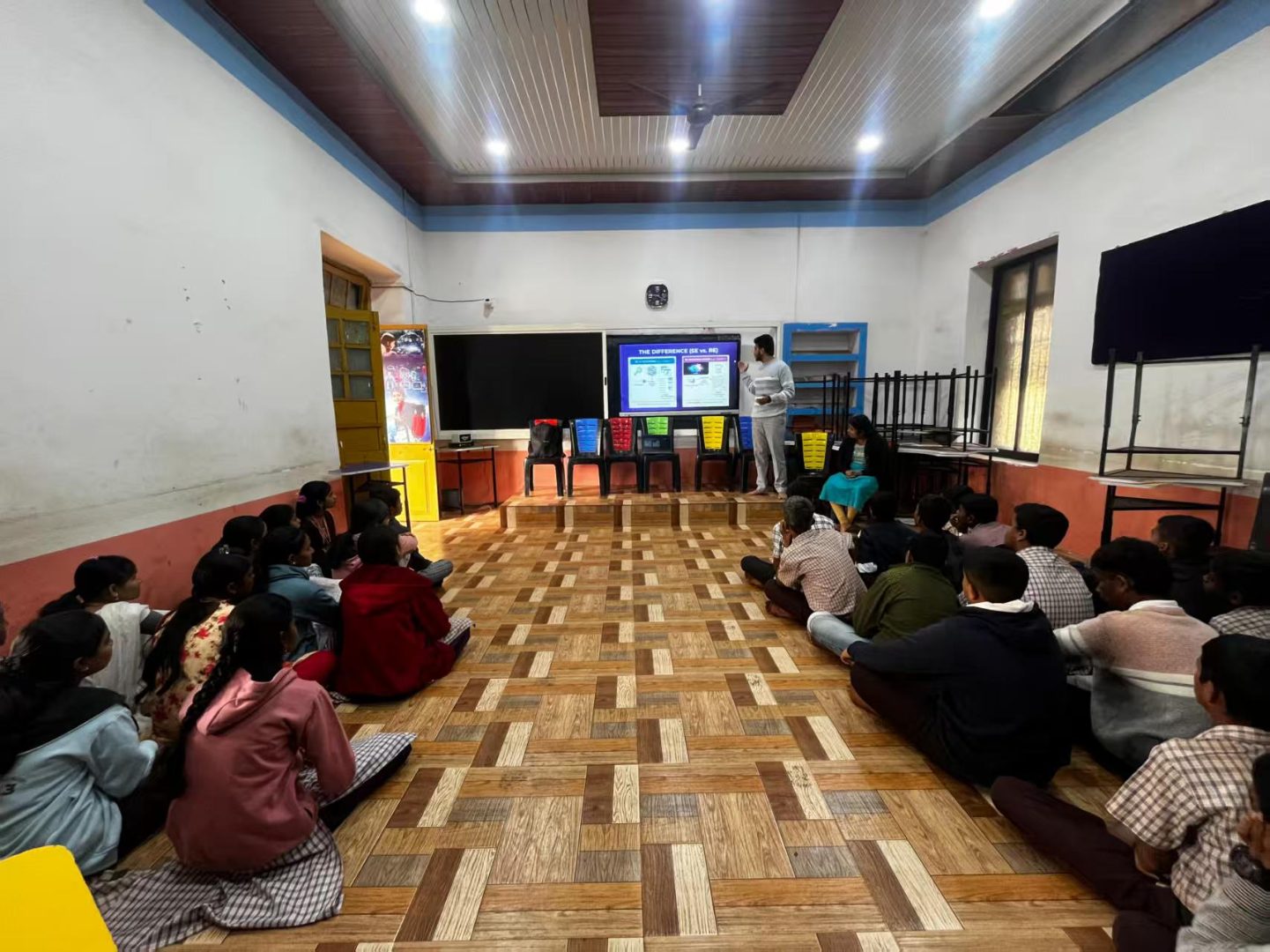
AI is reshaping work, public services, and civic life—yet many students still lack access to basic AI literacy. This is not only a technology gap; it is a capability gap. In 2025, 2.2 billion people r…
文章
From “AI Talk” to Classroom Capability
A Kolhapur case study on equitable AI literacy—and what it signals for education policy
By AIGW Policy Observatory February 15, 2026 5 min read
Newsletter
Stay ahead of the policy curve
Receive the latest briefs, event invitations, and analysis from the observatory.
Subscribe nowContinue reading
Related analysis
Governance政策信号·2026-09-29
Executive Order 14434 — Inaugurating the Era of Super Intelligence
United States. Executive order — executive-branch direction within lawful authority. To the maximum extent permitted by law, departments and agencies must use “Super Intelligence” / “SI” in specified non-statutory executive-branch materials. Previously issued regulations, Presidential actions, contracts, grants and historical documents need not be altered. For this order SI incorporates the existing AI definition in 15 U.S.C. § 9401(3); Congress has not changed that statutory definition. This is not a new horizontal enterprise AI statute.
3 min read
Governance政策信号·2026-09-18
NIST ARIA Evaluation Planning Manual
United States. Official technical / evaluation guidance — non-binding. ARIA-style evaluation planning combines model testing, red teaming and user testing. The manual is an official evaluation methodology, not binding federal AI law.
3 min read
Governance政策信号·2026-07-20
Commission Implementing Regulation (EU) 2026/1755
European Union. Binding implementing regulation — in force and directly applicable from 2026-08-10. Published in the Official Journal on 2026-07-21, the regulation establishes detailed arrangements for certain Commission proceedings under the AI Act, including procedures connected to Articles 92 and 101 and general-purpose AI evaluation and enforcement. It is legislation, not guidance.
3 min read