文章·Nov 5, 2026
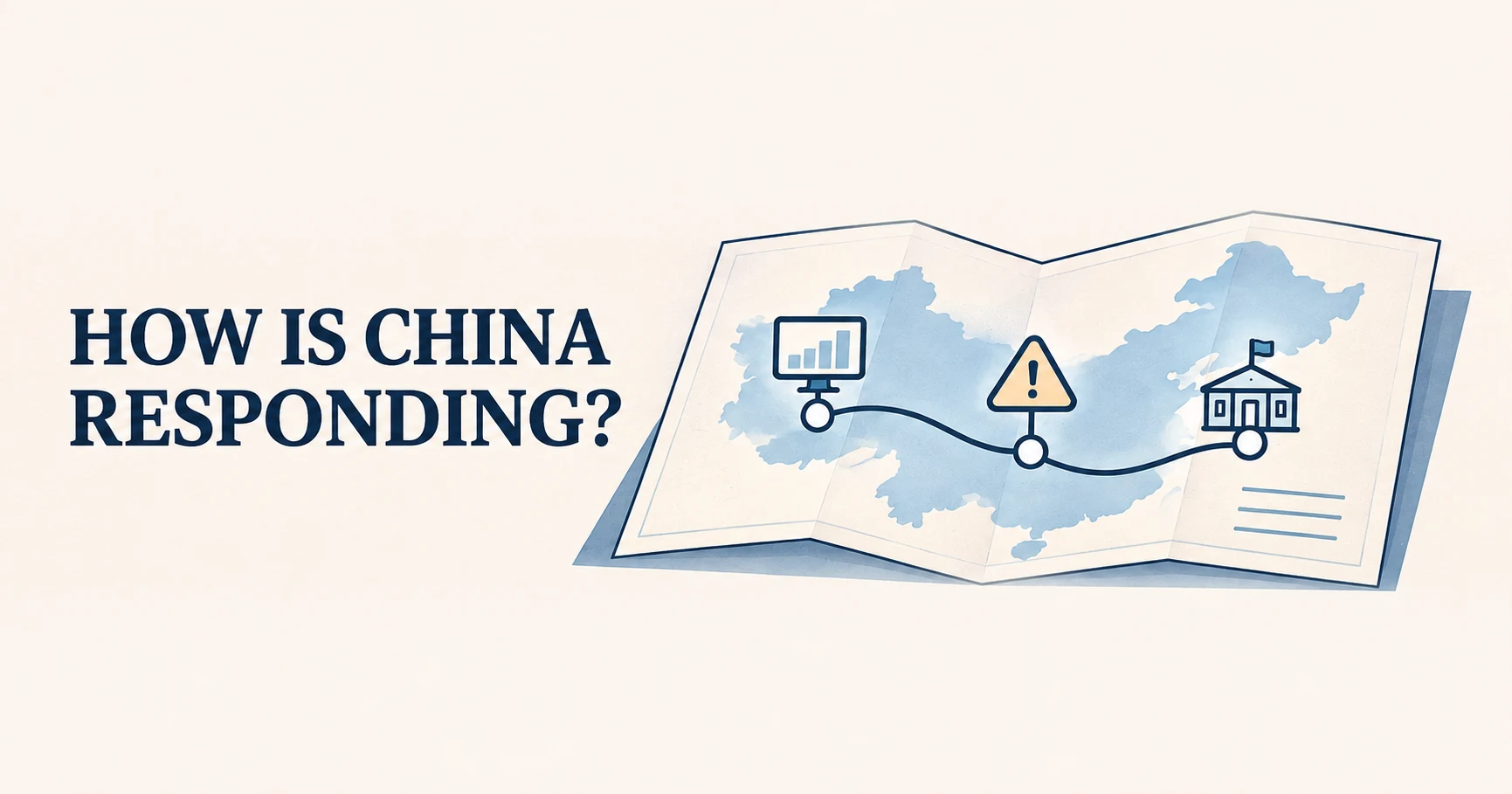
How China Is Responding to AI's Employment Impact
China's October 2026 AI employment policy connects risk assessment with public services. Five local examples reveal what is operational—and what remains planned.
AIGW Policy Observatory — Global AI Governance and Workforce Transformation Policy Observatory. AIGW Policy Observatory tracks how AI is governed, implemented and absorbed inside real institutions—connecting policy change, implementation evidence and workforce transition.
AIGW 政策观察站研究雇主如何围绕人工智能重塑岗位,以及政府如何应对就业与技能的变化。观察站以政策文件、企业披露和实地访谈为依据,比较中国与其他经济体的发展。
Current institutional intelligence
Policy signals, implementation evidence, workforce analysis, and institutional briefings for leaders navigating governed AI adoption.
China's October 2026 AI employment policy connects risk assessment with public services. Five local examples reveal what is operational—and what remains planned.
AIGW Policy Observatory
How JD.com and LONGi turn frontline experience into AI training and quality work in China—and why emerging roles do not automatically guarantee career progression.
AIGW Policy Observatory
Lenovo describes software teams combining a full-stack engineer with five AI agents. This case examines role redesign, agent management and what remains unverified about workforce...
Why Europe needs better evidence on AI's workplace impact, including junior hiring, adoption, job quality, organizational change and labour-market outcomes.
AI 治理概况
Country and jurisdiction profiles on AI laws, governance frameworks, institutions, enterprise implications, and workforce readiness.
Asia-Pacific

China’s AI governance system is not organized around a single horizontal AI Act. It is a layered governance stack built from cybersecurity, data security, personal information protection, internet information service regulation, algorithm recommendation rules, deep synthesis rules, generative AI service measures, AI-generated content labeling requirements, cross-border data controls, and technical standards. The result is a state-led, security-sensitive, platform-and-data governance model in which AI compliance is closely tied to content governance, data governance, filing or assessment mechanisms, technical labeling, and industrial policy.
North America

The United States remains a high-impact two-level governance jurisdiction: federal executive policy, agency authority, procurement, standards and enforcement operate alongside increasingly consequential state statutes and state attorney-general implementation. There is still no single comprehensive federal AI law, so enterprise exposure depends on federal/state/sector mapping.
Europe

The European Union remains the anchor jurisdiction for binding, cross-sector AI governance. Its model is distinctive because it combines a directly applicable regulation, a tiered risk framework, centralized Commission and AI Office oversight for general-purpose AI models, and member-state market surveillance for most AI systems. Since the previous review, the Digital Omnibus on AI has become binding and extended some high-risk implementation dates, while AI Act enforcement and Article 50 transparency obligations began operating on 2 August 2026.
机构研究
面向 AI 治理、劳动力转型与机构实施的研究简报、报告和可下载洞察资源。
Human presence is not human authority. Drawing on eight real-world AI deployments, this brief examines who can review, approve, override and make final decisions.
governance
A co-authored article published by the World Economic Forum that refers to exploratory AIGW research on AI and work.
Yves Zumbühl, Qiqing He · 联合署名外部文章
AI
AI workforce transformation is moving beyond tool adoption. This policy brief explains why enterprises need workforce architecture — integrating strategy, workflows, roles, capabilities, governance, and trust — to scale responsible, human-centered AI adoption
governance
How DBS connects enterprise AI deployment to banking role redesign, reskilling and internal mobility, with evidence on operating-model transformation and changing hiring demand.
DBS知识资源
Recorded expert dialogues and public convenings — citable knowledge assets from the Observatory’s programme.
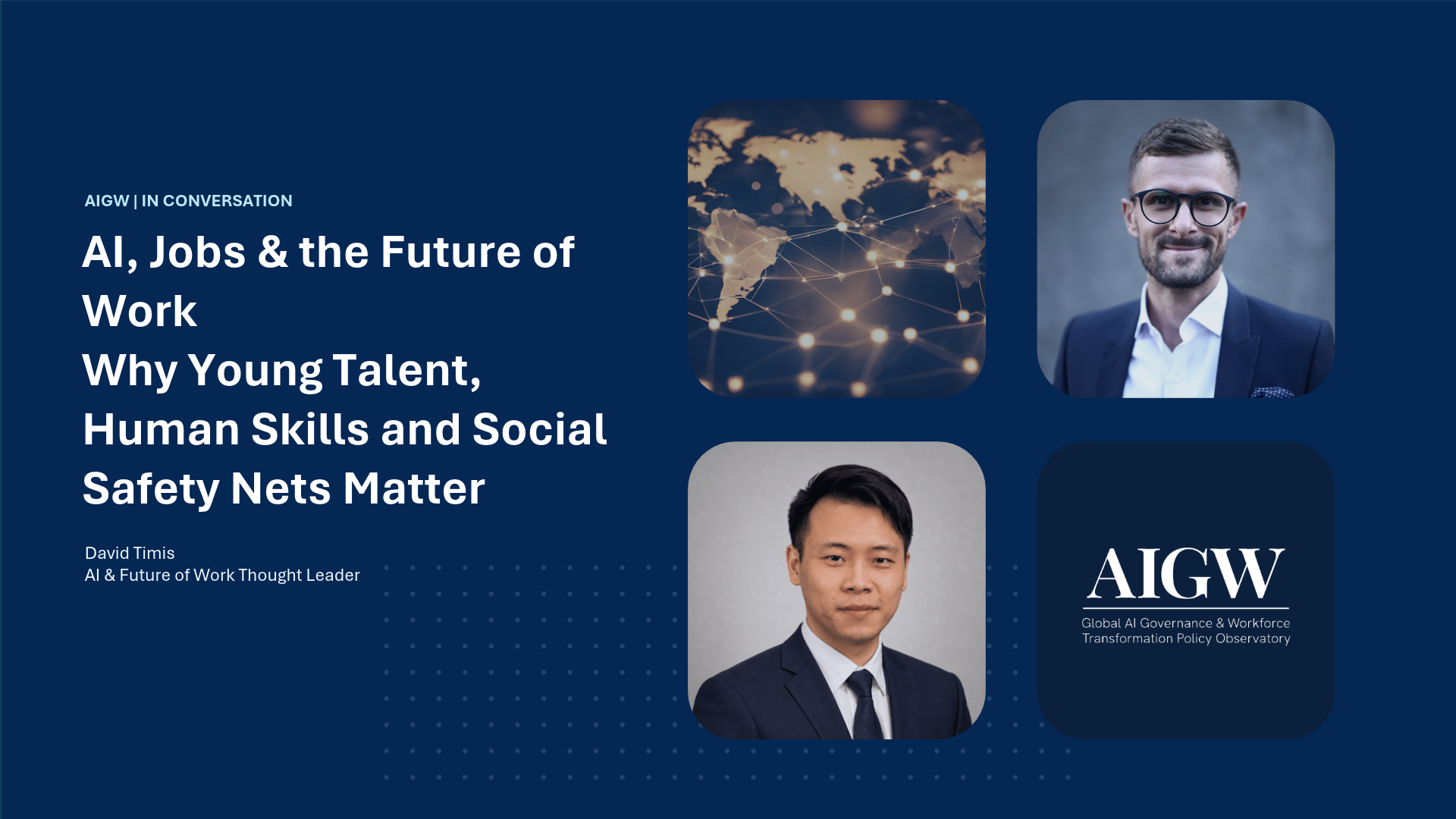
Qiqing He and David Timis
Conversation held 28 October 2026
观看回放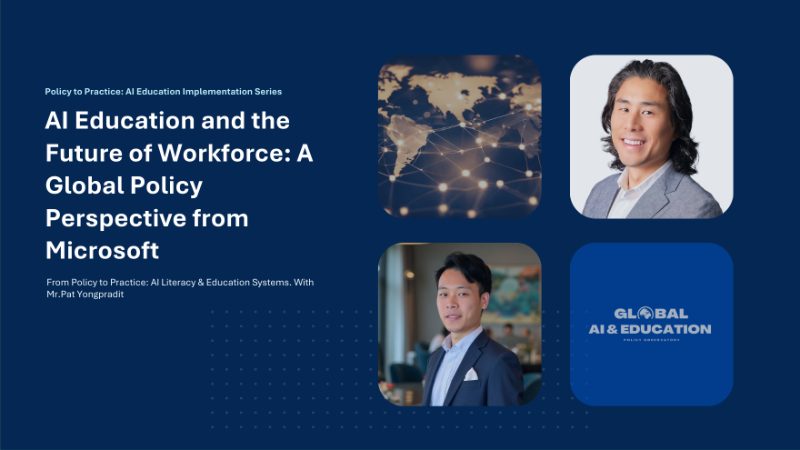
Mr.Pat Yongpradit
AI Education Policy Perspective
观看回放
Young Global AI Leaders from Chengdu, Chicago, Dubai, Nairobi, Lucerne
AI Education Policy Panel Discussion
观看回放Explore practical research companions and institutional workshops.
Explore Research Tools & Services对监管发展、治理预期、实施影响与跨境政策变化进行决策层解读。
结构化记录和分析组织如何从 AI 试点走向有治理的采用、工作流程再设计与劳动力转型。
聚焦专家对话,呈现实施挑战、新兴实践与机构学习。
为角色转型、管理能力、工作流程再设计、负责任采用与劳动力准备度提供研究支持。
围绕不同司法辖区的治理系统、机构采用、劳动力转型与实施证据开展合作研究。