
洞察出版China
JD.com and LONGi: From Frontline Workers to AI Trainers in China
How JD.com and LONGi turn frontline experience into AI training and quality work in China—and why emerging roles do not automatically guarantee career progression.
2026-11-07
Signals and interpretation
Interpreted signals and briefings on AI governance, workforce transformation, enterprise implementation, and institutional adaptation.
Interpreted AI governance, workforce, risk, and implementation signals for institutional decision-makers.
资源库筛选
按资源类型、受众、地理区域、主题和年份搜索。
How JD.com and LONGi turn frontline experience into AI training and quality work in China—and why emerging roles do not automatically guarantee career progression.
Lenovo describes software teams combining a full-stack engineer with five AI agents. This case examines role redesign, agent management and what remains unverified about workforce outcomes.
Why Europe needs better evidence on AI's workplace impact, including junior hiring, adoption, job quality, organizational change and labour-market outcomes.
China's October 2026 AI employment policy connects risk assessment with public services. Five local examples reveal what is operational—and what remains planned.
How China's 2026 AI employment policies could connect employment-risk monitoring, skills development, public services and worker transition support, with implementation evidence from Shanghai and Longyan.
Comparing DBS and Meta, this AIGW brief examines how AI readiness, operating-model redesign, reskilling and workforce transitions must be evaluated together.
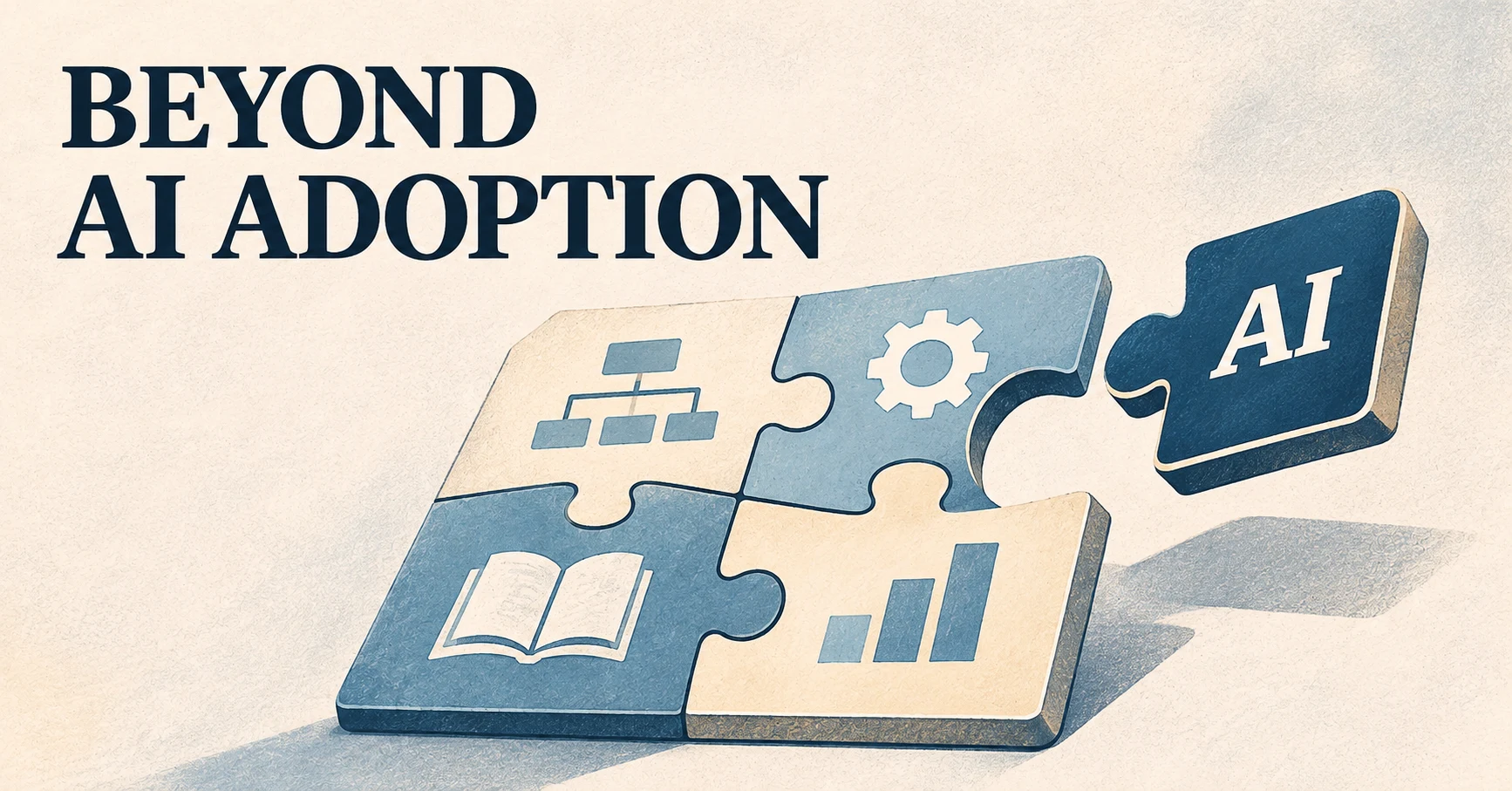
Singapore's new SNEF AI-HR pilot brings together HR tools, job redesign and skills analytics. Its central test is whether AI adoption can improve work, not just efficiency.
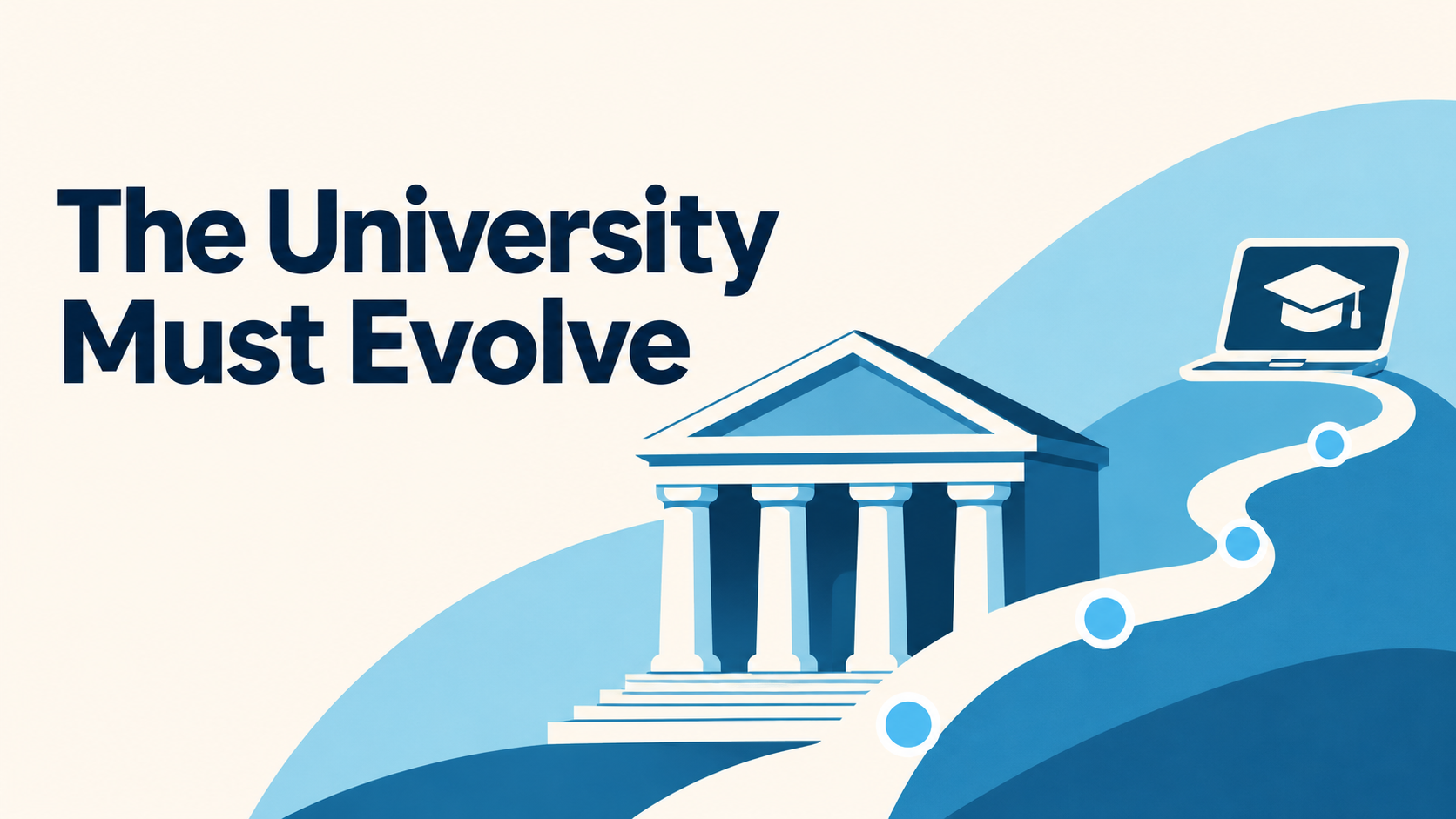
How universities across Asia and Europe can strengthen AI reskilling through lifelong learning, microcredentials, institutional reform and equitable access.
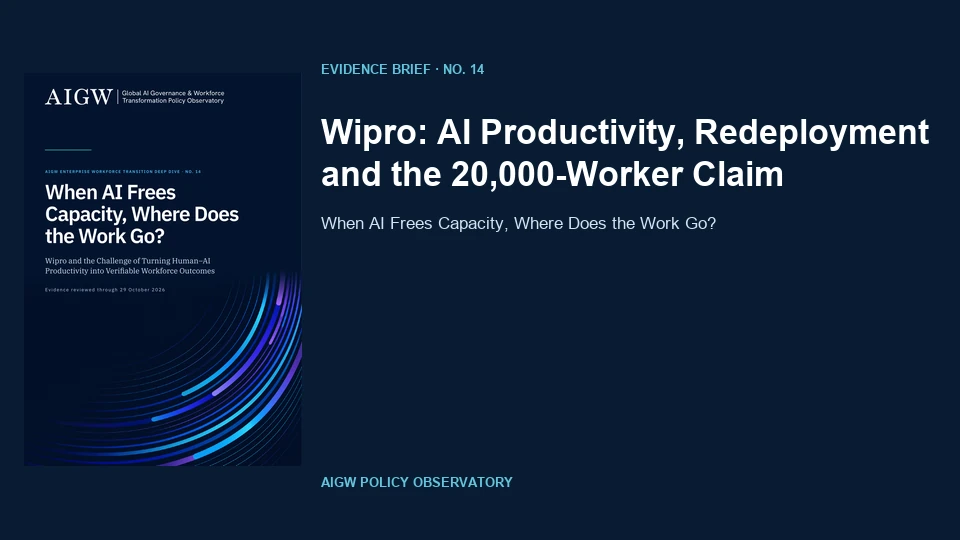
Wipro says AI released productive capacity equivalent to 20,000 workers. This Deep Dive investigates redeployment, training, workforce changes and the evidence needed to establish what happened next.
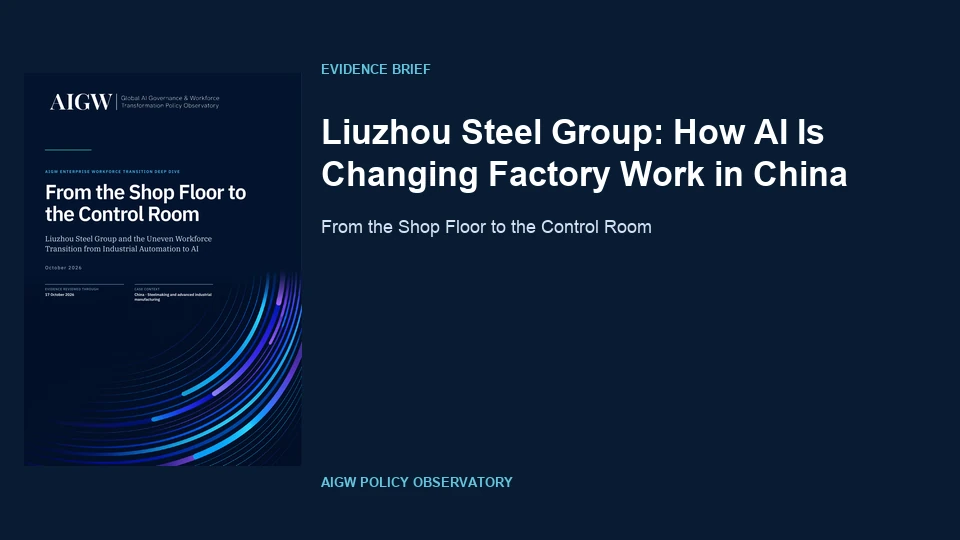
How Liuzhou Steel Group's AI and industrial automation are moving workers from physically demanding production tasks toward control-room monitoring, intelligent systems and new digital capabilities in China.
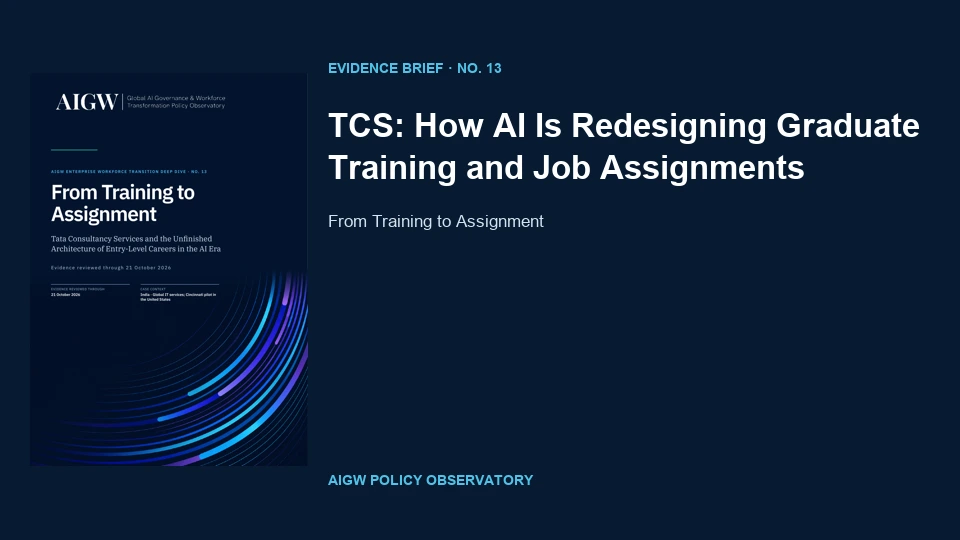
How Tata Consultancy Services connects AI training, graduate development and AI-assisted job assignment—and why skills investment alone cannot prove career progression.
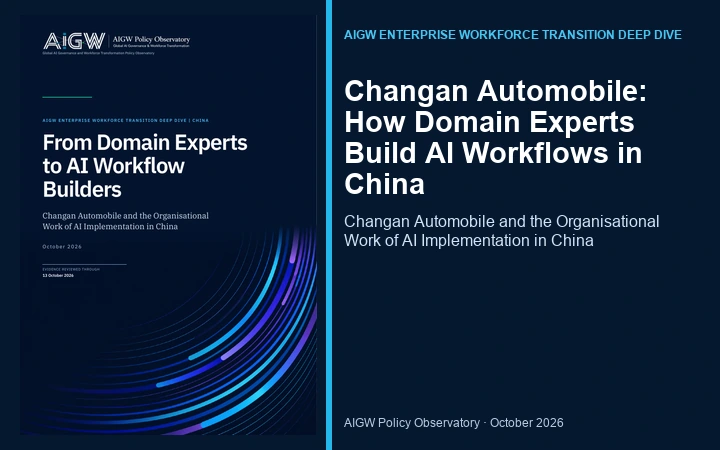
How Changan Automobile's engineers and business employees use AI to build workflows across manufacturing, engineering, quality and procurement in China.
Meta's Project OT reveals how AI-native team redesign, workforce restructuring and agent-readiness limits created operational and employee-trust challenges.
Drawing on nine enterprise AI transitions, this flagship report examines how organizations redesign workflows, roles, capabilities, human authority and careers as AI moves from adoption into everyday operations.
Human presence is not human authority. Drawing on eight real-world AI deployments, this brief examines who can review, approve, override and make final decisions.
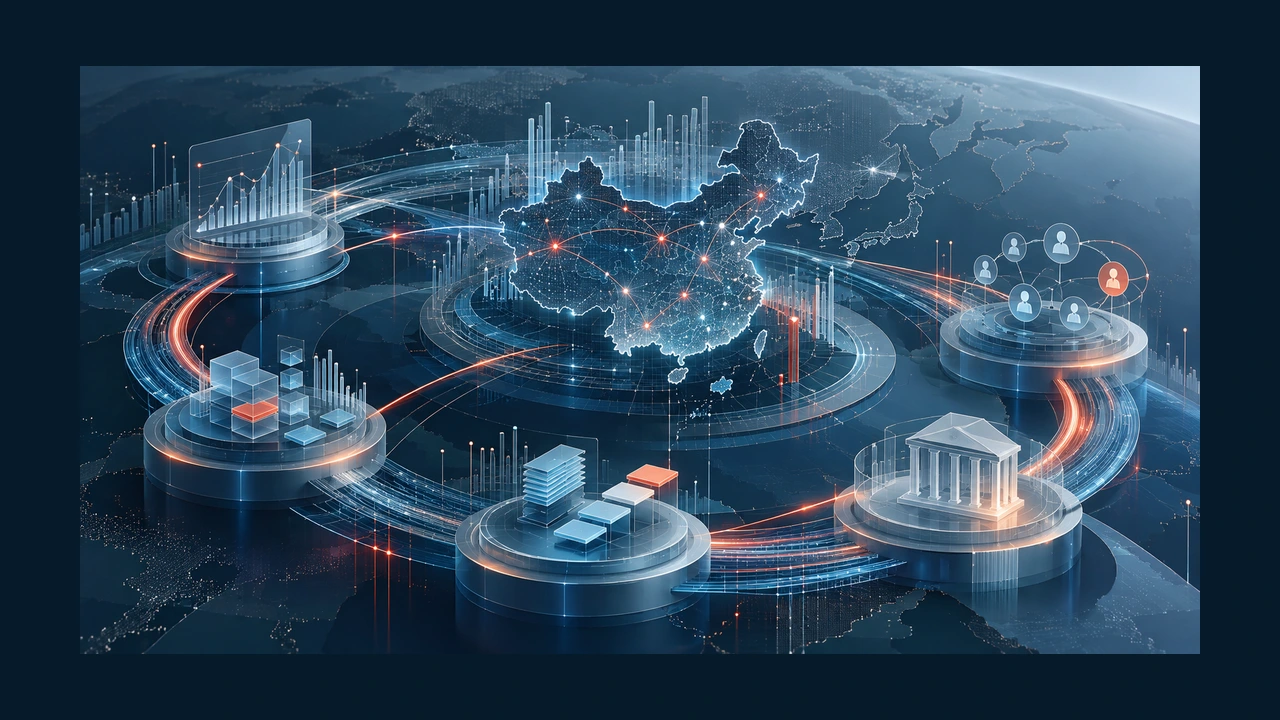
China is building an emerging system for AI employment-impact monitoring, skills intelligence, reskilling and public employment services. What matters next is whether it improves workforce transition outcomes.
A deep dive into how BNY moved from enterprise-wide AI access to employee-built agents, digital employees and an AI-enabled workforce operating model.
A policy and employer design framework for rebuilding entry-level work as AI automates traditional junior tasks and changes how early-career workers develop judgment, capability and responsibility.
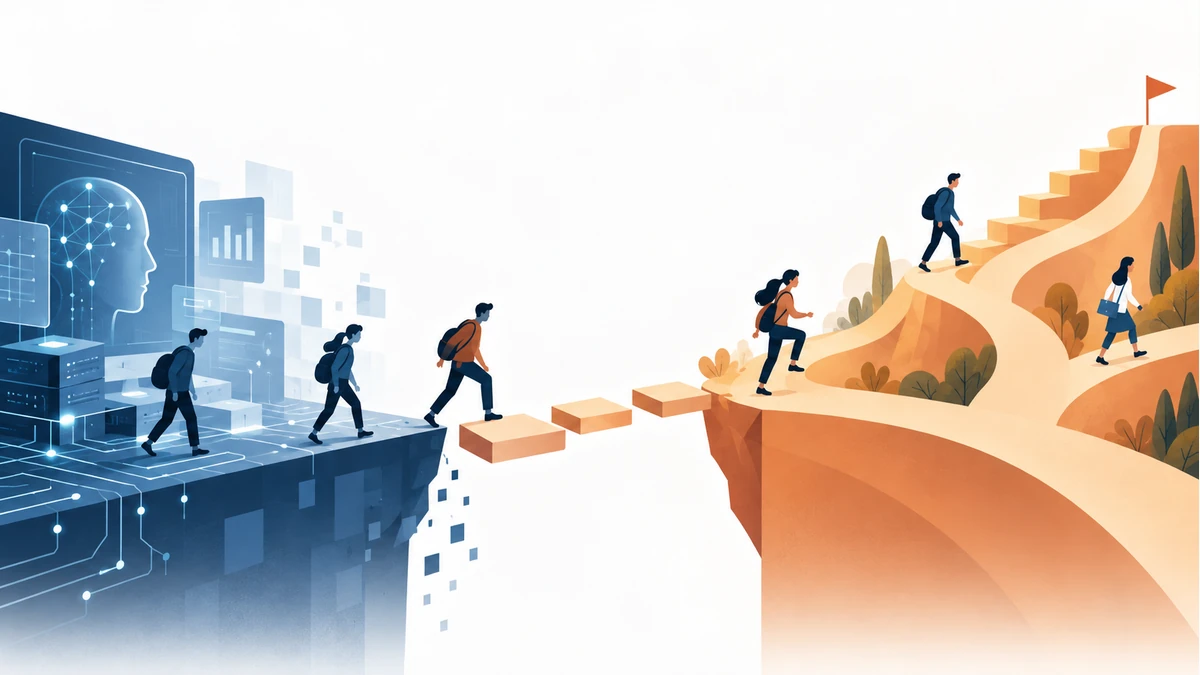
Ten interview-based accounts explore how AI changes learning, productivity, career progression and control over work—and why doing more does not always mean advancing further.
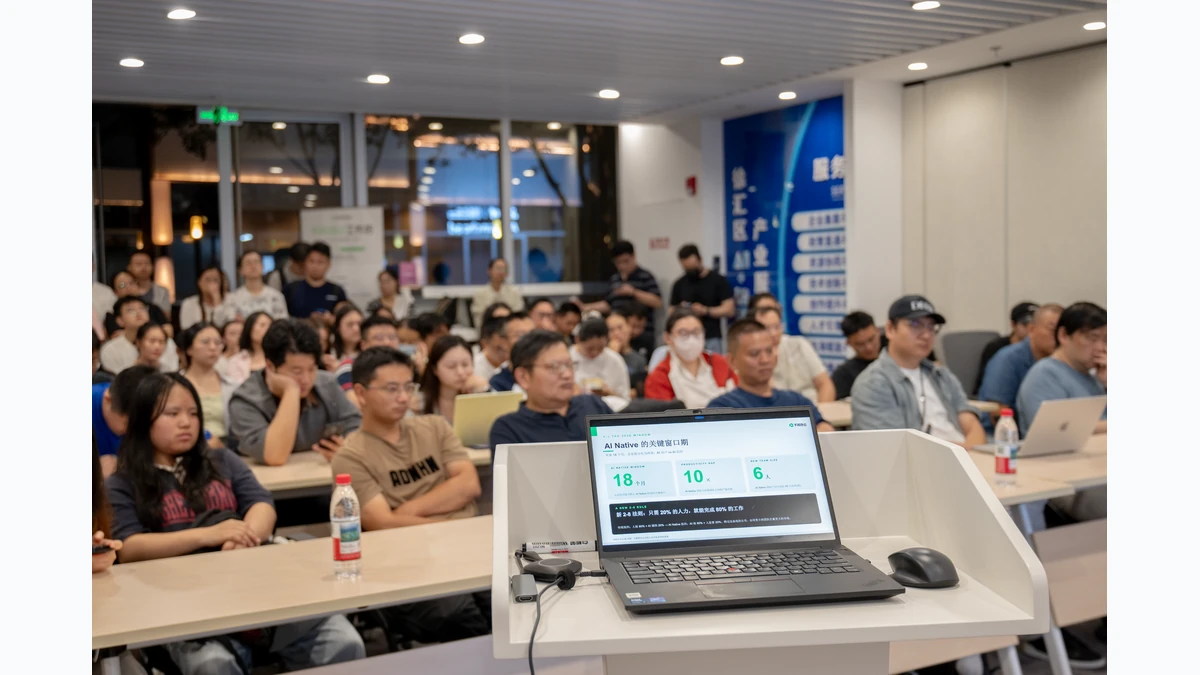
AI optimism and career insecurity can coexist. Exploratory interviews examine how opportunity, control over work and capability development shape young people's career prospects.
Evidence from Salesforce, DBS, PwC US, LONGi and JD.com shows how AI changes tasks, roles, reskilling, redeployment and hiring before its full employment effects become visible.
How Deutsche Telekom’s RAN Guardian agents automate live mobile-network monitoring and corrective action, with evidence on faster operations and the limits of public human-control and workforce data.
How JD.com customer-service automation turns frontline experience into complex-care and AI-operations roles, and why AI-trainer work can itself face further automation.
How Kaiser Permanente scales ambient AI scribes to reduce physician documentation burden while preserving patient permission, clinical review and final human decision authority.
How SimplifyNext and Singapore’s IMDA Company-Led Training connect paid employment, mentoring and client AI projects to graduate and mid-career entry pathways.
How LONGi's Jiaxing solar factory uses AI quality inspection, with documented inspector-to-AI-trainer pathways, human verification and evidence limits on labour reduction.
How PwC US is redesigning junior audit roles around AI, review and professional judgment, while rebuilding apprenticeship and planning a smaller graduate intake.
An evidence-based case study of how Salesforce deployed Agentforce in customer support, redesigned human work, redeployed and reskilled employees, and reduced support staffing requirements without a simple one-to-one story of AI-driven layoffs.
How DBS connects enterprise AI deployment to banking role redesign, reskilling and internal mobility, with evidence on operating-model transformation and changing hiring demand.

China is becoming an important test case for what comes after AI adoption: how companies redesign processes, develop people and build workforce systems around the technology.
This research note examines how artificial intelligence is changing the relationship between early-career work, learning and capability development. Drawing on five structured conversations with early-career professionals and one strategic peer conversation, it identifies three emerging organizational signals: developmental tasks may be automated while low-learning work remains; stronger AI-assisted outputs may conceal weaker understanding and ownership; and broad responsibility does not necessarily translate into meaningful development. The note argues that sustainable AI-enabled productivity requires organizations to redesign work, learning and career progression together. It proposes practical questions for deciding which tasks should be automated, augmented, protected or redesigned, and how employees should be expected to verify, explain, judge and independently modify AI-assisted work. The findings are exploratory and are intended to establish a research agenda rather than make representative claims about Gen Z as a whole.

A guide to China’s 2026–2030 framework for AI adoption, employment transition, public-sector transformation and risk governance

As frontier AI firms and professional-services firms move deeper into enterprise deployment, a tempting assumption is emerging: if AI implementation is hard, the answer is to bring in a stronger partn…

Recent signals from OpenAI, GitLab, Gartner, and the European Commission suggest that enterprise AI adoption is entering a new phase. The challenge is no longer simply whether organizations can access powerful AI tools, but whether they can redesign workflows, govern agents, prepare semantic infrastructure, and operationalize transparency requirements.
AI workforce transformation is now entering a more difficult phase.The first phase was mostly about adoption: which tools employees should use, how much productivity they could unl…

AI workforce transformation is moving beyond tool adoption. This policy brief explains why enterprises need workforce architecture — integrating strategy, workflows, roles, capabilities, governance, and trust — to scale responsible, human-centered AI adoption

Companies are discovering that AI pilots are easy to launch but difficult to absorb. At the early stage of enterprise AI rewarded experimentation. Teams tested copilots, employees tried new tools, exe…
AI is moving from individual productivity assistance into managerial workflows.That distinction matters. A productivity tool helps an employee work faster, summarize a document, pr…

AI governance is entering a more operational phase.<div><br></div><div>For the past several years, much of the public debate has focused on principles: safety, fairness, transparency, privacy, account…

Enterprise AI transformation is moving from an adoption challenge to an institutional readiness challenge.<div><br></div><div>The first phase of enterprise AI was defined by access to tools. The secon…

Enterprise AI is crossing a threshold: from tools employees test to systems organizations begin to rely on.As adoption scales, the strategic risk is not simply choosing the wrong m…

As AI adoption accelerates across sectors, the central challenge is no longer access to tools but the ability of institutions to redesign workflows, governance, and workforce systems around them. This flagship brief from the Global AI Governance and Workforce Transformation Policy Observatory examines why many organizations remain trapped in fragmented experimentation and outlines a practical framework for moving toward governed, scalable implementation.

Google and IBM’s latest enterprise AI moves matter for a reason that goes beyond vendor competition. Read narrowly, they are product and platform announcements. Read together, they point to a broader …

Artificial intelligence is still often framed as a race of models, tools and technical breakthroughs. But the more consequential shift is now happening elsewhere. Across enterprise, public education a…
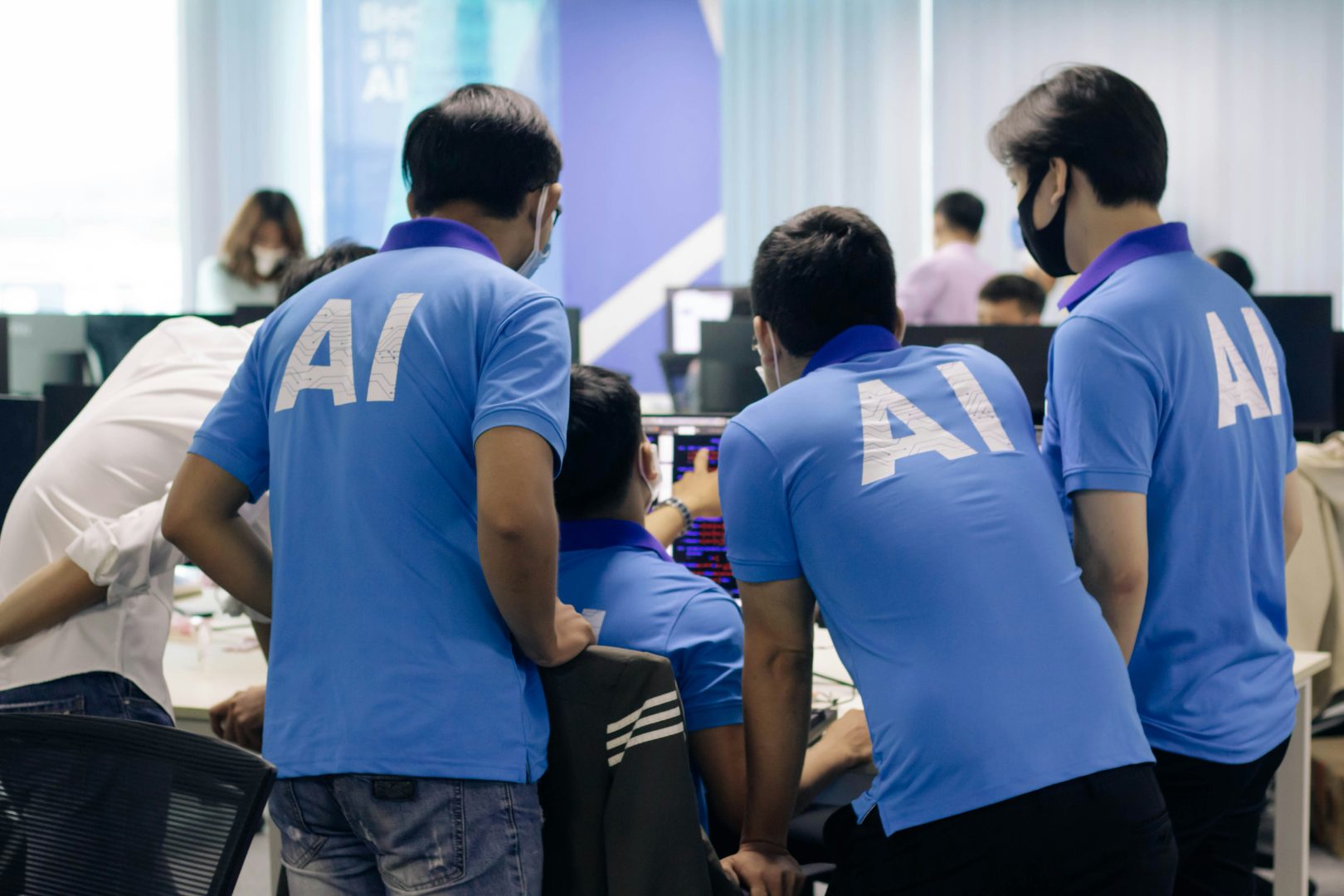
AI is no longer a question of whether organizations should adopt it. The more serious question is whether they are prepared to reorganize work around it. Many firms already have AI activity - teams ar…
This brief synthesizes evidence and expert dialogue on scaling AI literacy and governance beyond pilots. It argues for treating AI literacy as baseline infrastructure, aligning responsible-use policy with cybersecurity maturity, and preparing for workforce change as task-displacement first.
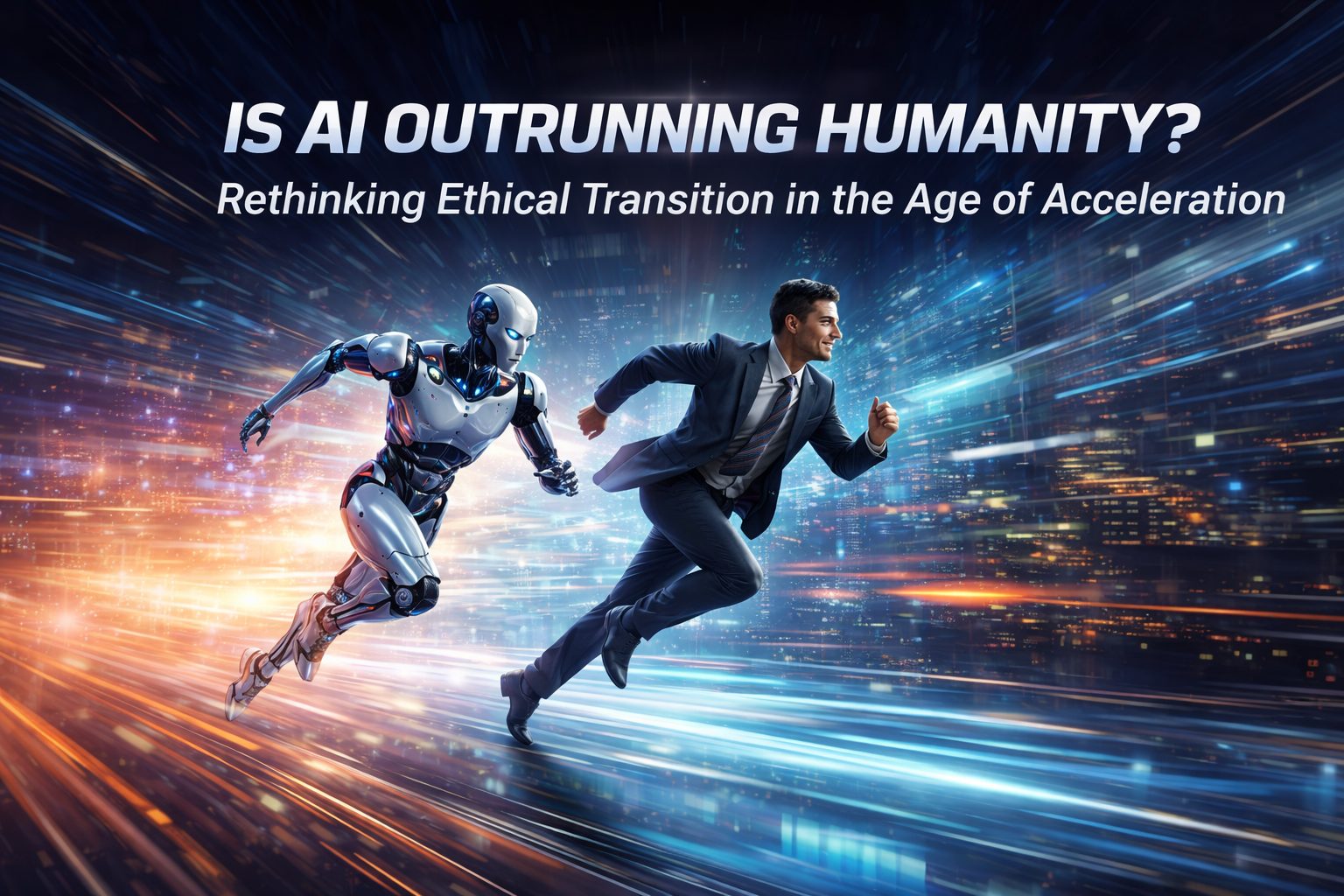
Let’s call this AI teleportation: the shortcut that skips the middle—the struggle, the reasoning, the reflection, the slow building of meaning.
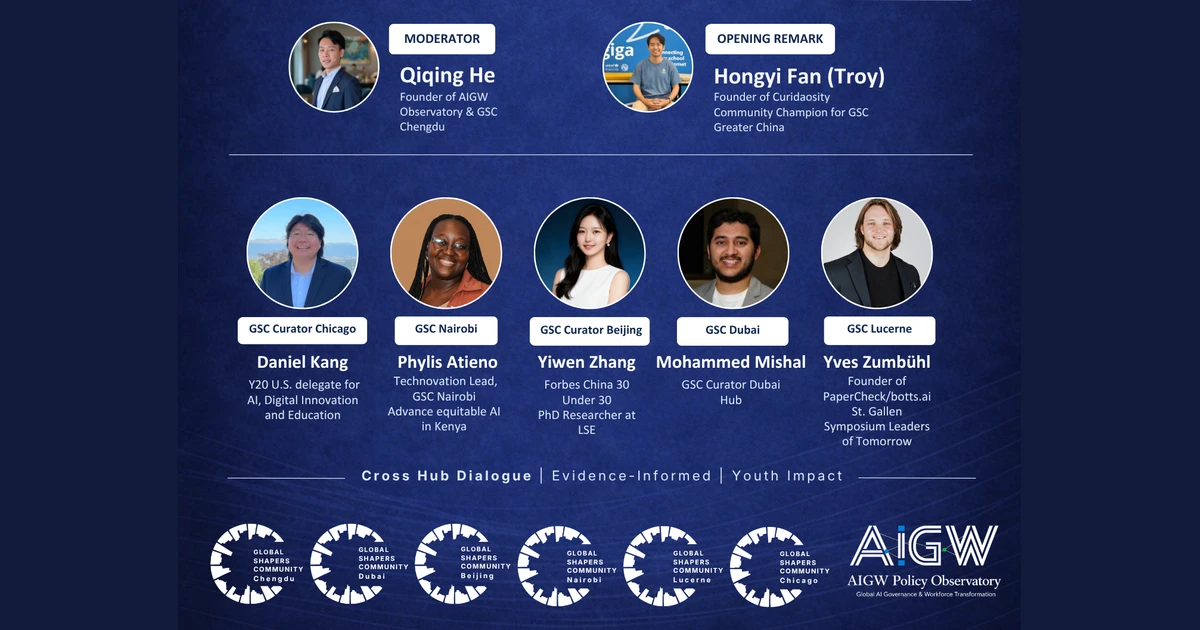
What does responsible, inclusive AI in education actually look like across different national contexts? In this cross-hub dialogue, young leaders and practitioners from Chicago, Nairobi, Beijing, Dubai, and Lucerne come together to discuss what is working, what is breaking, and what should happen next as AI moves into education systems around the world. This session explores:
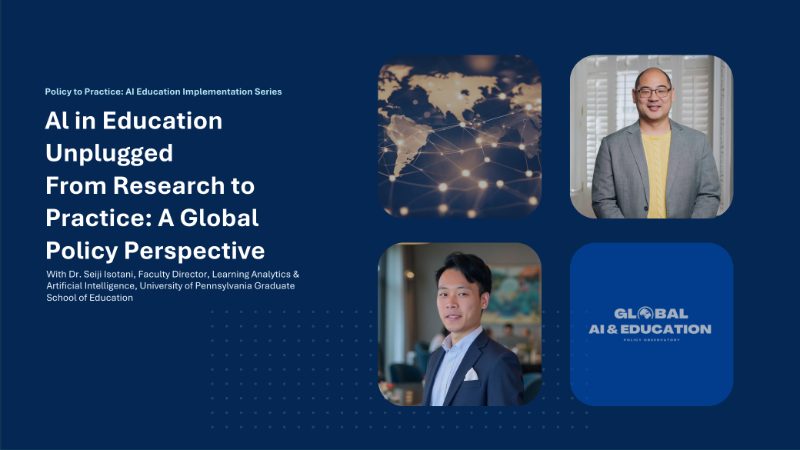
How can AI reach the students who need it the most — especially in places where internet access, devices, or infrastructure are limited? One of the most inspiring aspects of Dr. Isotani’s work is the development of AI “Unplugged” learning approaches. Instead of assuming constant connectivity or advanced devices, his research explores ways students can still learn the concepts behind AI through activities, structured exercises, and low-tech educational tools.
来自观察站的机构洞察资源。
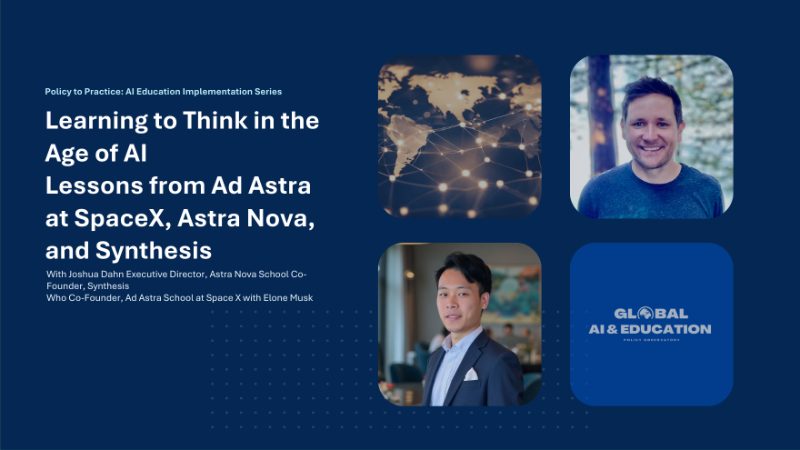
How should education evolve in the age of AI? Long before AI became a mainstream public conversation, Josh was already working on bold experiments in learning, interdisciplinary education, problem-solving, and critical thinking. Even by today’s standards, his work remains strikingly ahead of its time, which makes it all the more remarkable that he began building in this direction nearly a decade ago. In this interview, we explore: what traditional education systems still struggle to do well why critical thinking and collaborative problem-solving matter more than ever how AI is changing the meaning of learning what kind of schools and learning environments may better prepare young people for the future This clip features the opening part of our conversation and offers a window into the thinking behind some of the most forward-looking experiments in modern education.

来自观察站的机构洞察资源。

Merck’s multi-year AI partnership with Google Cloud is more than a major technology investment. It is a high-value signal that enterprise AI is moving from isolated pilots to cross-functional operating-model redesign. This case brief extracts what the move reveals about pilot-to-production transition, institutional readiness, and the organizational conditions required for AI to scale inside real enterprises.