
Evidence Brief · 劳动力转型
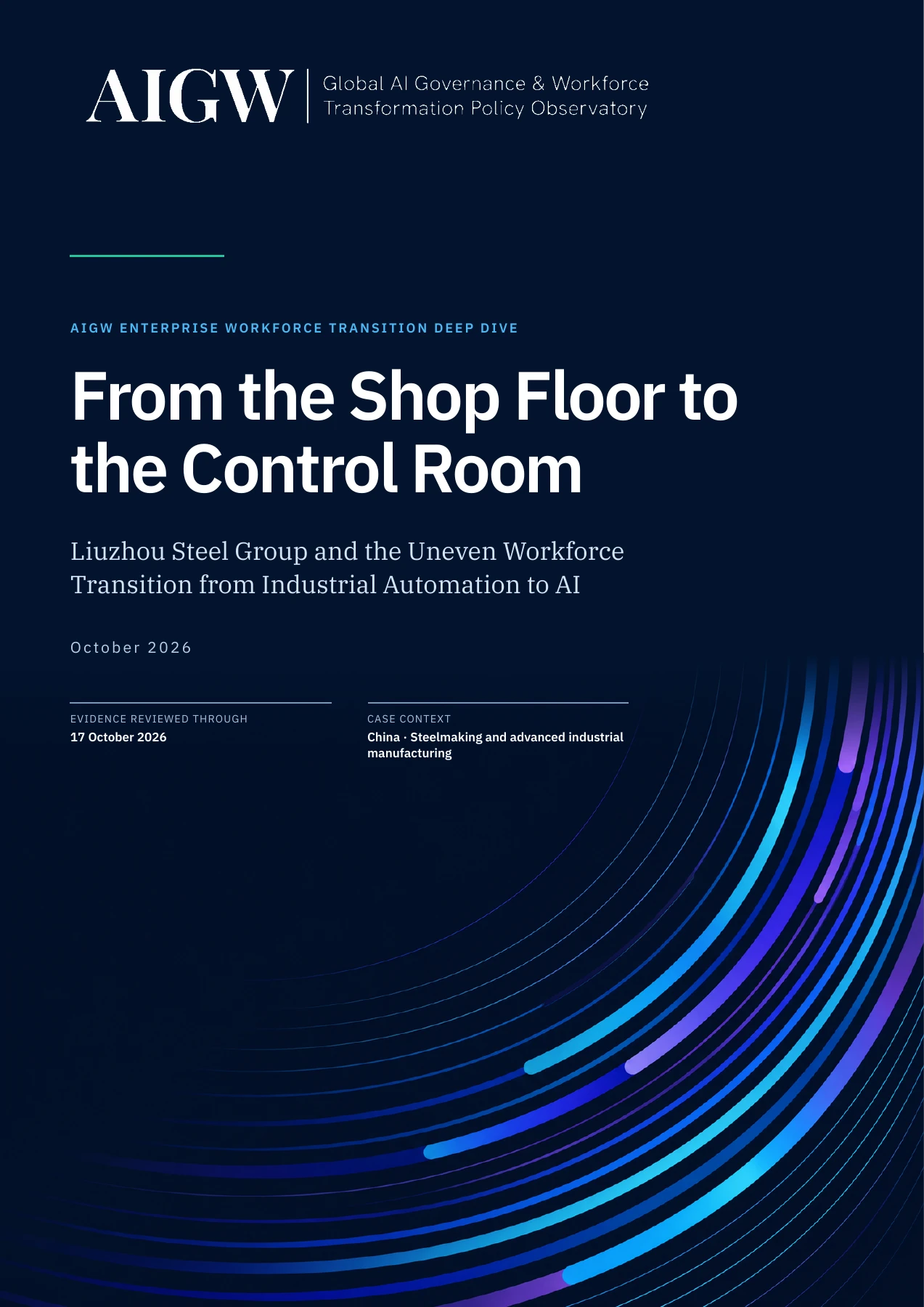
Liuzhou Steel Group: How AI Is Changing Factory Work in China
How Liuzhou Steel Group's AI and industrial automation are moving workers from physically demanding production tasks toward control-room monitoring, intelligent systems and new digital capabilities in China.
概览
Guangxi Liuzhou Iron and Steel Group (Liugang) provides a concrete case of how industrial automation and artificial intelligence are reshaping physical work inside China's steel industry. Its transformation is not a single technology deployment. It is a layered process involving remote operation, 5G connectivity, intelligent equipment, machine vision, industrial AI models and changes in human responsibilities.
This 18-page AIGW Enterprise Workforce Transition Deep Dive examines developments across Liuzhou and Fangchenggang, including hot-rolling operations, automated molten-iron logistics, intelligent lifting equipment, refining optimisation, plate production and employee-built digital applications. Reported worker experiences show operators moving from direct equipment handling and observation toward centralized monitoring, confirmation and exception-related responsibilities.
The case also illustrates substantial reported changes in operating-unit labour requirements. At Fangchenggang, a molten-iron transport operation previously involving more than 70 personnel rotating through transport duties was described as requiring approximately ten monitoring and maintenance positions following a multi-year automation programme. This is evidence of a changed operating model, not a verified count of layoffs or an effect attributable solely to the 2026 Xuantie industrial model.
Liugang's transformation also extends beyond the physical shop floor. Employees have participated in low-code application development, digital training and the creation of AI assistants. These activities indicate emerging opportunities for industrial workers to contribute domain knowledge to digital systems, although the available evidence does not establish workforce-wide proficiency, promotion, wage improvement or successful career transitions.
The report places these changes within China's AI+ Manufacturing policy environment and evaluates them through AIGW's Workforce Architecture approach. It distinguishes task and workflow redesign, role changes, capability development, human authority and workforce measurement, emphasizing the importance of preserving the chronology of earlier automation and newer AI deployment.
The central finding is that technological capability can advance faster than the institutional evidence needed to assess its consequences for workers. Industrial AI can move dangerous or repetitive tasks into connected systems, but meaningful workforce transformation also requires clear decision rights, reliable supervision, validated capabilities and transparent records of what happens to the people whose work changes.
关键信息
关于本出版物
Suggested citation
AIGW Policy Observatory. (2026). From the Shop Floor to the Control Room: Liuzhou Steel Group and the Uneven Workforce Transition from Industrial Automation to AI. AIGW Enterprise Workforce Transition Deep Dive. https://gaeedu.org/publication/liuzhou-steel-group-ai-factory-work-china
References
相关劳动力转型证据
Guangxi Liuzhou Iron and Steel Group (Liugang)
Hot-rolling operators move toward AI-supported control-room monitoring
China
Li Jialin and rolling teams describe a shift from direct hot-equipment observation toward centralized monitoring and confirmation, with model-supported operating data and inspection.
相关出版物
Flagship Report
所应用的研究框架
Workforce Architecture for the AI Enterprise
Drawing on nine enterprise AI transitions, this flagship report examines how organizations redesign workflows, roles, capabilities, human authority and careers as AI moves from adoption into everyday operations.
应用 AIGW 劳动力架构方法,研究工业工作流程、工人能力、人类决策权与就业结果。
12 October 2026
Evidence Brief
比较研究
Changan Automobile: How Domain Experts Build AI Workflows in China
How Changan Automobile's engineers and business employees use AI to build workflows across manufacturing, engineering, quality and procurement in China.
比较中国制造业员工如何将领域经验转化为数字工具、人工智能工作流程与新的职责。
17 October 2026
Evidence Brief
比较研究
LONGi: How AI Quality Inspection Is Turning Frontline Expertise into AI Training
How LONGi's Jiaxing solar factory uses AI quality inspection, with documented inspector-to-AI-trainer pathways, human verification and evidence limits on labour reduction.
从制造业视角,比较人工智能辅助质检、一线专业经验与不断变化的能力要求。
October 2026