
ArticlePrimary China evidence
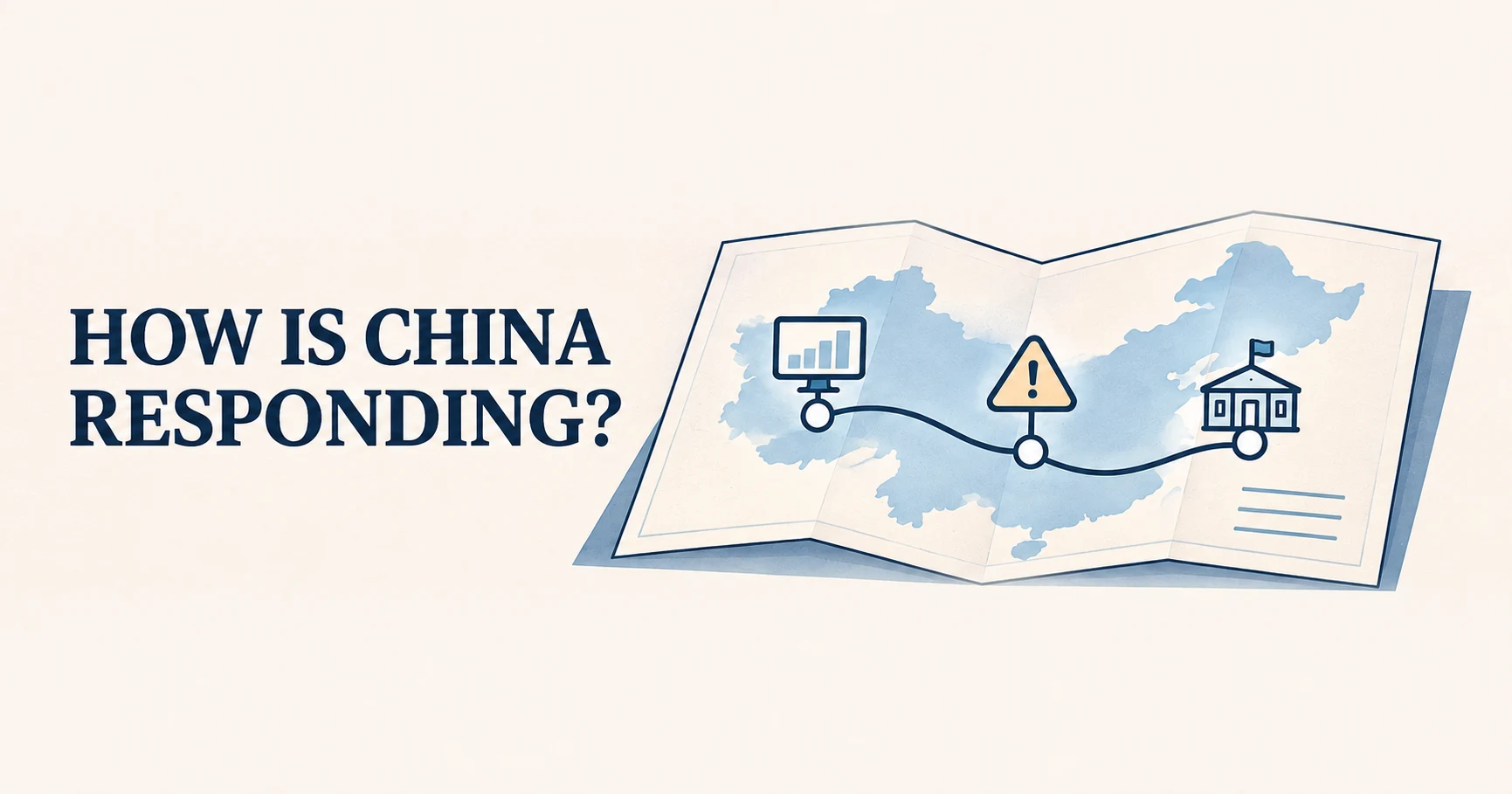
How China Is Responding to AI's Employment Impact
China's October 2026 AI employment policy connects risk assessment with public services.
Country workforce transformation hub
A source-led view of how AI is changing tasks, workflows, decision rights, roles, and pathways across Chinese enterprises and public systems.
Evidence boundary: adoption and productivity claims alone do not establish net employment effects or worker benefit. The records below distinguish observed work changes from workforce responses and measured outcomes.
Recent, explicitly classified analysis with China as a primary or materially relevant geography. Text-only mentions are not included.
China's October 2026 AI employment policy connects risk assessment with public services.

China is building an emerging system for AI employment-impact monitoring, skills intelligence, reskilling and public employment services.

Ten interview-based accounts explore how AI changes learning, productivity, career progression and control over work—and why doing more does not always mean advancing further.
Evidence from Salesforce, DBS, PwC US, LONGi and JD.com shows how AI changes tasks, roles, reskilling, redeployment and hiring before its full employment effects become visible.
How Changan Automobile's engineers and business employees use AI to build workflows across manufacturing, engineering, quality and procurement in China.
How JD.com customer-service automation turns frontline experience into complex-care and AI-operations roles, and why AI-trainer work can itself face further automation.
Published tracker signals and approved case records with source-supported work-change evidence. Each item links to its underlying public record.
The agent arranges frequently needed materials nearer picking positions overnight using the next day's production orders.
ZTE · E4 evidence
A dairy employee without programming background assembled a knowledge-based tool that helps frontline farm workers seek herd-health guidance.
Mengniu · E4 evidence
Eight robots handle loading and transfer at a tablet-testing station previously staffed by eight workers.
Longcheer Technology · E3 evidence
Employees ask a retrieval-augmented assistant for procedures, source passages and steps instead of relying solely on manual document searches.
Lanzhou Petrochemical · E3 evidence
Photo/voice reports feed AI classification and routing; staff remediate.
Nanjing Iron and Steel · E4 evidence
宋雨蒙 built an agent spanning creative stages.
Yadea · E4 evidence
Published research and normalized releases with an explicit China scope and workforce-transformation classification.
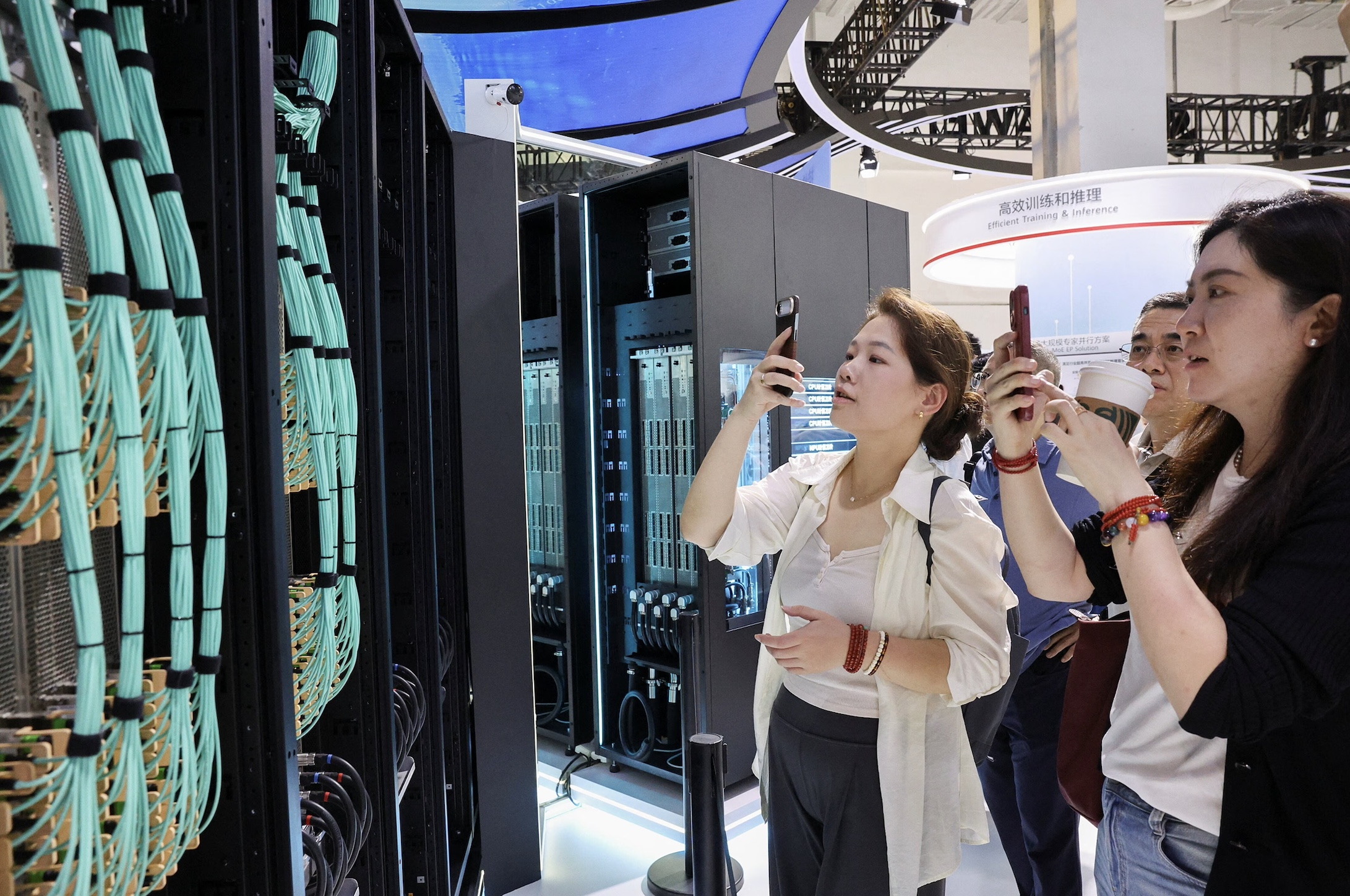
A co-authored article published by the World Economic Forum that refers to exploratory AIGW research on AI and work.
An evidence-led examination of AI agents, human oversight and early-career work at Anthropic, with a comparison to China.
An evidence-led examination of Klarna’s AI customer service, outsourced capacity and the limits of claims about workforce outcomes.
How JD.com and LONGi turn frontline experience into AI training and quality work in China—and why emerging roles do not automatically guarantee career progression.
Lenovo describes software teams combining a full-stack engineer with five AI agents.
How China's 2026 AI employment policies could connect employment-risk monitoring, skills development, public services and worker transition support, with implementation evidence from Shanghai and Longyan.
Only content explicitly placed in the Policy Tracker and substantively connected to workforce transformation appears here.
China. Opinion 国办发〔2026〕29号, signed 16 October, directs job creation, worker skills and transition support, employment risk assessment and monitoring.
Governance context
China’s AI governance model is best understood as a layered regulatory architecture rather than a single comprehensive AI statute.
Read the China Governance ProfileUse each source collection for its intended role: interpreted intelligence, documented work transitions, research, policy monitoring, and implementation cases.